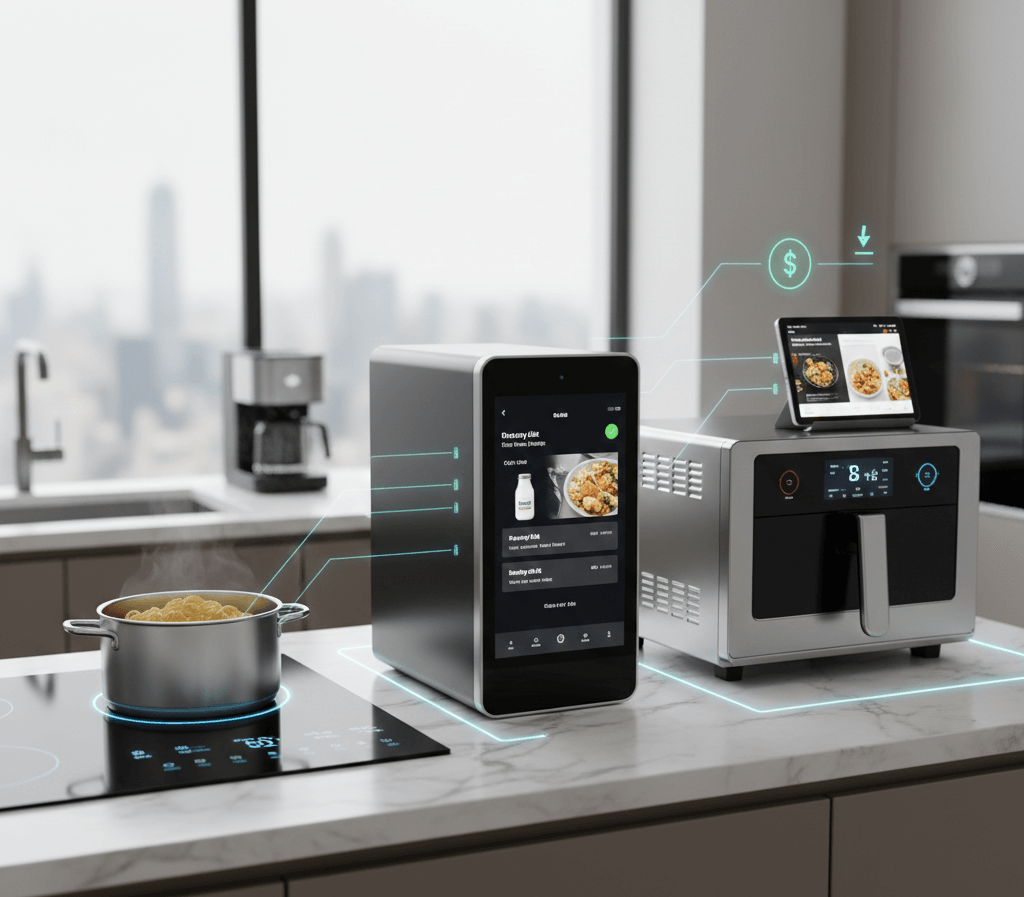
Are Smart Kitchen Appliances Worth It in 2026?
Smart kitchen appliances are worth it in 2026 for households that prioritise energy savings, time efficiency, and reduced food waste. They help lower electricity costs through smart scheduling, minimise grocery waste with inventory tracking, and save daily cooking time with automation. However, they may not be suitable for users who prefer simple appliances, have unreliable internet, or rarely use advanced features.
In 2026, the term “smart kitchen” has shifted from a futuristic concept to a daily reality for millions.1 However, with the average smart appliance costing 20% to 50% more than its traditional counterpart, the question remains: are these gadgets an essential investment or just expensive digital clutter?
Whether you’re a gourmet chef or a busy parent, determining the “worth” of smart technology requires looking beyond the sleek touchscreens.2 This guide breaks down the true ROI of smart kitchen appliances in 2026, focusing on time savings, energy efficiency, and food waste reduction. Learn more at TechToTable’s Smart Kitchen Guides.
1. The Financial ROI: Can Smart Appliances Pay for Themselves?
The most common argument for smart appliances is energy and resource efficiency. In 2026, energy prices remain a primary concern for homeowners, making “passive savings” a key metric.3
Energy Efficiency and Smart Scheduling
Modern smart dishwashers and washing machines now feature Grid-Aware Technology. They can communicate with your local utility provider to identify “off-peak” hours when electricity is cheapest.
- The Savings: By automatically running a cycle at 2:00 AM instead of 7:00 PM, a smart dishwasher can reduce its operational cost by up to 30% annually.
- Smart Power Control: AI-driven ovens now use “Adaptive Heating,” which shuts off elements slightly early and uses residual heat to finish the cooking process, shaving 5–10% off your cooking energy bill.
Reducing Food Waste
The average household throws away nearly $1,500 worth of food per year. Smart refrigerators with internal AI cameras (like those from Samsung and LG) help mitigate this by:
- Inventory Tracking: Sending an alert to your phone when the milk is two days from expiring.
- Shopping Accuracy: Allowing you to “see inside” your fridge while at the grocery store, preventing the “Do we already have eggs?” double-purchase.4
- Recipe Integration: Suggesting meals based on what is currently in your fridge to ensure nothing goes to waste.5
2. The Time ROI: Reclaiming Your “Mental Load”6
For most users in 2026, the real value isn’t just in the dollars saved—it’s in the minutes recovered. Smart tech acts as a “digital sous-chef,” handling the repetitive tasks that contribute to “decision fatigue.”
| Feature | Time-Saving Benefit | Impact |
| Remote Preheating | Start the oven from your car or office. | Saves 15-20 mins of “waiting” time. |
| Guided Cooking | Step-by-step video instructions on the appliance screen. | Reduces meal prep stress and errors. |
| Auto-Measure Faucets | “Pour exactly 500ml of boiling water.” | Eliminates searching for measuring cups. |
| Predictive Maintenance | Fridge alerts you to a failing compressor before it breaks. | Saves hours (and money) on emergency repairs. |
3. The Matter Standard: Interoperability in 2026
One of the biggest “worth it” factors in 2026 is the widespread adoption of Matter. Previously, smart appliances were locked into “walled gardens” (e.g., your Samsung fridge couldn’t talk to your Apple HomePod).
With Matter, your kitchen becomes a unified ecosystem. You can check the timer of your Bosch oven on your Google Nest Hub, or have your Philips Hue lights flash blue when the dishwasher is finished. This seamlessness has removed the frustration of managing 20 different apps, making the technology significantly more user-friendly.
4. When Smart Tech is Not Worth It
Despite the benefits, there are several “red flags” where the investment may not yield a positive return:
- Short Lifespan vs. Tech Obsolescence: While a traditional high-end oven might last 15–20 years, the software inside a smart oven might become obsolete or unsupported in 7–10 years.
- The “Gimmick” Factor: Features like “Smart Toasters” with touchscreens often add $200 to the price without actually improving the quality of the toast.
- Privacy Concerns: Every connected device is a data point. If you are uncomfortable with an appliance manufacturer knowing your eating habits or daily schedule, the “cost” of your privacy may outweigh the convenience.
5. Case Study: Induction Cooktops
Induction cooking is perhaps the best example of a smart investment in 2026. By using electromagnetism to heat the pan directly, these surfaces are 90% efficient, compared to 40% for gas.
The Smart Edge: In 2026, smart induction hobs feature “Pan Detection” and “Auto-Temp” sensors. If a pot of water begins to boil over, the hob senses the vibration and temperature spike and automatically reduces the power. This prevents messes and saves the time you would have spent scrubbing the stovetop.
Quick Summary: Smart Appliances in 2026
- ✔ Save 10–30% on energy through smart scheduling
- ✔ Reduce food waste using AI-powered tracking
- ✔ Save time with guided cooking and automation
- ✔ Improve home efficiency through Matter integration
- ❌ Higher upfront cost
- ❌ Possible software obsolescence
- ❌ Privacy considerations
Frequently Asked Questions (FAQs)
Q1. How much more do smart kitchen appliances cost in 2026?
Smart kitchen appliances typically cost between 20% and 50% more than traditional models, depending on brand, features, and connectivity options.
Q2. Do smart appliances really save electricity?
Yes. Many smart appliances use off-peak scheduling and adaptive heating, which can reduce annual energy consumption by up to 30% in some households.
Q3. Can smart kitchen appliances reduce food waste?
Yes. Smart refrigerators and inventory systems help track expiry dates, suggest recipes, and prevent duplicate purchases, significantly reducing wasted food.
Q4. Are smart kitchen appliances difficult to use?
Most modern smart appliances are designed with user-friendly apps and guided controls, making them suitable even for beginners.
Q5. What is Matter, and why is it important?
Matter is a universal smart home standard that allows devices from different brands to work together, improving compatibility and ease of use.
Q6. How long do smart appliances usually last?
Physically, they may last 12–20 years, but software support often lasts 7–10 years, which can affect long-term usability.
Q7. Do smart appliances work without internet?
Most can function manually, but features like remote control, notifications, and energy tracking require an active internet connection.
Q8. Are smart kitchen appliances safe for privacy?
Reputable brands use encryption and security updates, but users should review privacy policies and app permissions before purchase.
Q9. Which smart appliance offers the best return on investment?
Induction cooktops, smart dishwashers, and smart refrigerators typically provide the highest ROI due to energy savings and waste reduction.
Q10. Who should avoid buying smart kitchen appliances?
Users with limited internet access, minimal cooking habits, or preference for simple appliances may not benefit fully from smart features.
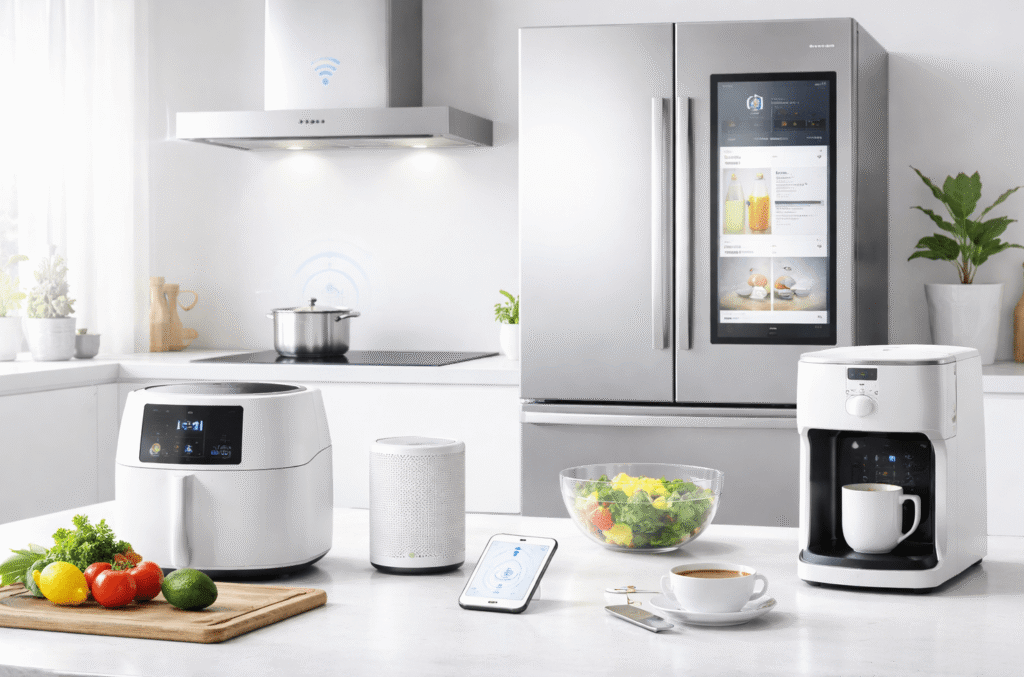
Final Verdict: Are They Worth It?
Smart Kitchen Appliances are worth the money IF:
- You are replacing an appliance that is 10+ years old (the energy savings alone will be significant).
- You live in an area with high utility costs where smart scheduling can save money.
- You genuinely use meal-planning and inventory-tracking features to reduce grocery waste.7
They are NOT worth it IF:
- You are paying a premium just for a touchscreen on an appliance you rarely use.
- You prefer “analog” living and find app notifications to be an annoyance rather than a help.
- Your home has unreliable Wi-Fi, which can render many smart features useless.
As we move further into 2026, the “smart” aspect of appliances is becoming standard. The goal is no longer to have a “cool” kitchen, but a frictionless one. When chosen wisely, these appliances don’t just cook food—they manage your home, protect your wallet, and give you back your most precious resource: time. Learn more at TechToTable’s Smart Kitchen Guides.