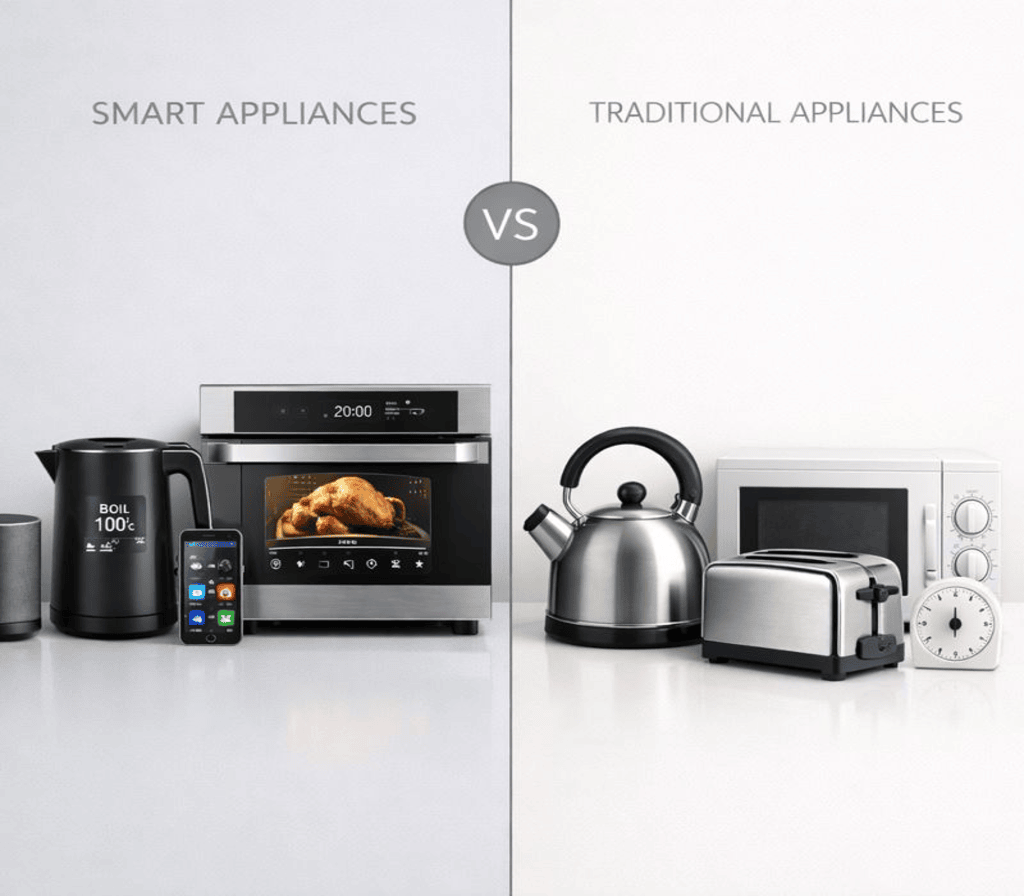
Smart kitchen appliances promise convenience, automation, and long-term savings—but are they really worth the higher price compared to traditional appliances? Many homeowners upgrade without fully understanding the real costs involved, only to realise later that not every “smart” feature adds value.
In this detailed comparison, we break down the true cost of smart vs traditional kitchen appliances, including upfront prices, running costs, maintenance, and long-term savings. Instead of marketing claims, this guide focuses on real-world usage, helping you decide which option actually makes financial sense for your home.
Whether you are setting up a new kitchen or upgrading existing appliances, this article will help you understand where smart technology saves money—and where it doesn’t. By the end, you’ll have a clear answer on which appliances are genuinely worth the investment in 2026 and which traditional options still offer better value.
1. Upfront Investment: The “Smart Premium”
In 2026, the price gap between smart and traditional appliances has narrowed, but a “smart premium” still exists. On average, smart models command a 20% to 40% higher price tag than their non-connected counterparts.1
✅ Quick Verdict: Smart vs Traditional Kitchen Appliances
Short answer: Smart kitchen appliances can save money over time — but only when used correctly.
If you value convenience, energy efficiency, and automation, smart appliances are worth the higher upfront cost, especially for busy households.
For simple cooking needs or tight budgets, traditional appliances still offer better value due to lower prices and easier maintenance.
- Choose smart appliances for long-term savings and time efficiency
- Choose traditional appliances for affordability and simplicity
Average Price Breakdown (UK 2026 Market Data)
| Appliance Type | Traditional (Mid-Range) | Smart (Matter-Enabled) | The “Smart Premium” |
| American Fridge-Freezer | £950 – £1,900 | £1,750 – £3,600 | ~£800+ |
| Dishwasher | £450 – £750 | £800 – £1,150 | ~£350 |
| Oven / Range Cooker | £650 – £1,500 | £1,600 – £2,900 | ~£950 |
| Microwave / Air Fryer | £120 – £250 | £280 – £450 | ~£160 |
Why the difference? You aren’t just paying for a Wi-Fi chip. Smart appliances in 2026 include advanced sensors (turbidity sensors in dishwashers, internal cameras in fridges) and high-efficiency variable-speed compressors that traditional models often lack. Learn more at TechToTable’s Smart Kitchen Guides.
Understanding the Real Cost Difference
Smart kitchen appliances often come with higher upfront prices due to their advanced features, connectivity, and automation. These include remote control, energy monitoring, and smart scheduling. Traditional appliances, on the other hand, are usually more affordable and focus on basic functionality. For many households, the initial price plays a major role in deciding which option to choose.
However, the real cost goes beyond purchase price. Smart appliances can reduce long-term expenses through better energy efficiency and reduced wastage. Features such as automatic shut-off and usage tracking help control electricity consumption. Over time, these savings can balance the higher initial investment, especially for families who use their appliances frequently.
2. Operational Costs: Energy and Efficiency
This is where the smart investment begins to claw back its initial cost. Modern smart appliances are designed for Grid-Awareness, allowing them to communicate with utility providers to optimize energy consumption.
Passive vs. Active Savings
- Traditional Savings: A traditional Energy Star appliance saves money through better insulation and more efficient motors.
- Smart Savings: A smart appliance saves through Time-of-Use (TOU) optimization. In 2026, many energy providers offer cheaper rates at night. Smart dishwashers and washing machines can automatically delay their start until the moment electricity prices hit their lowest point.
Annual Energy Cost Comparison
Research from 2025-2026 suggests that a fully integrated smart kitchen can reduce annual appliance energy consumption by 15% to 25% compared to a modern traditional kitchen.
- Smart Fridge-Freezer: ~£65/year (Uses AI to optimize cooling cycles during off-peak hours and learns family door-opening patterns).
- Traditional Fridge-Freezer: ~£92/year.
- The Verdict: Over a 12-year lifespan, a smart fridge-freezer saves approximately £324 in energy alone. While this doesn’t fully cover the £800 “Smart Premium,” it bridges nearly 40% of the cost gap before you even factor in the massive savings from reduced food waste.
Best Picks for 2026: Smart Kitchen Appliances
Best Smart Fridge: Samsung Bespoke AI Family Hub (2026 Edition)
- Why it wins: Features the latest “AI Vision Inside” camera that identifies 33 different fresh food items and sends expiration alerts to your phone.
- The ROI: Directly reduces that £1,500 annual food waste cost mentioned in your draft.
Best Smart Dishwasher: Bosch Series 8 with Home Connect & Zeolith
- Why it wins: It uses Matter-protocol to sync with your energy provider, automatically starting when your UK energy tariff is at its lowest price (usually 2 AM–5 AM).
- The ROI: Saves approximately 30% on electricity compared to manual timing.
Best Picks for 2026: Traditional Kitchen Appliances
Best Traditional Range Cooker: AGA Masterchef Deluxe
- Why it wins: While it lacks a Wi-Fi screen, its heavy-duty induction hobs and solid build quality mean it will likely last 20+ years, avoiding the “software obsolescence” of smart ovens.
- The ROI: Lower lifetime cost due to zero subscription fees and fewer sensor repairs.
Best Traditional Dishwasher: Miele G 5000 Series
- Why it wins: Miele tests their traditional machines for 20 years of use. It uses a simple mechanical pump that a local UK electrician can fix easily without needing a software technician.
3. The “Hidden” ROI: Food Waste Reduction
The most significant financial return for smart appliances—specifically refrigerators—is often overlooked: Food Waste.
The average UK household in 2026 loses roughly £1,200 annually to spoiled food. Smart fridge-freezers address this through:
- AI Vision: Tracking expiration dates and sending “Eat Me First” alerts directly to your smartphone.
- Remote Inventory: Preventing “double-buying” at the supermarket by letting you check your fridge contents via a live internal camera.
If a smart fridge-freezer reduces your food waste by just 20%, it saves you £240 per year. Over a five-year period, that totals £1,200, which more than covers the initial “Smart Premium” for most high-end models.
4. Maintenance and Longevity: The Traditional Advantage
While smart appliances win on efficiency, traditional appliances take the lead in repairability and lifespan.
The Complexity Penalty
- Traditional Appliances: Feature mechanical switches and standard heating elements. Parts are abundant, and many repairs are “DIY-friendly.”
- Smart Appliances: Incorporate complex Control Boards (PCBs), touchscreens, and sensors.2
- Traditional Dishwasher: Replacing a standard drain pump might cost around £120 to £140 including parts and labour.
- Smart Dishwasher: Replacing a main control board can easily exceed £350, plus the higher call-out fee for a manufacturer-authorised technician who possesses specialized software diagnostic tools.
5. Intangible Value: The “Time is Money” Factor
To determine if smart appliances are truly worth it, you must quantify your time. In 2026, smart appliances offer “Mental Load” reduction:5
- Remote Monitoring: Knowing your oven is off while you’re at the office provides peace of mind that is hard to price.
- Auto-Replenishment: Smart dishwashers that order their own detergent when low save you a trip to the store.6
- Guided Cooking: Ovens with built-in “Step-by-Step” AI can turn a novice into a chef, potentially saving hundreds of dollars otherwise spent on takeout.
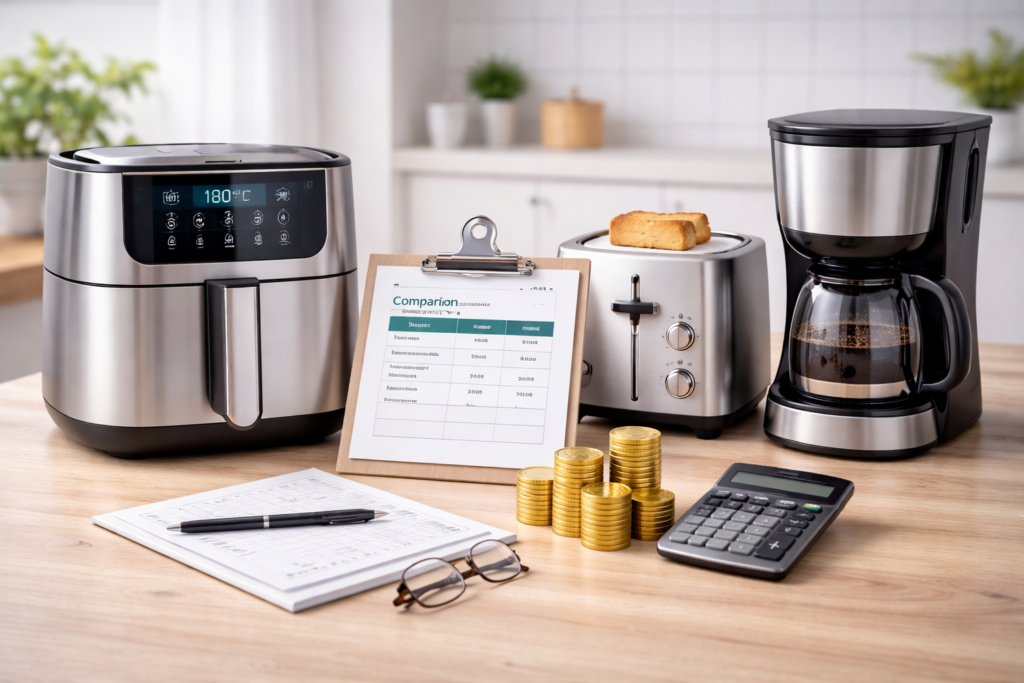
Summary: Which One Wins?
Choose Traditional Appliances If:
- Upfront budget is tight: You need the most “bang for your buck” today.
- You value longevity: You want an oven that will still be working in 2040.
- You live in a low-cost energy area: The energy savings won’t justify the premium.
Choose Smart Appliances If:
- You live in a high-cost energy zone: TOU optimization will pay off quickly.
- You struggle with food waste: The inventory tracking features will save you thousands over the appliance’s life.
- You are building a “Matter” ecosystem: You want a home where devices work together to automate your chores.
Frequently Asked Questions
Are smart kitchen appliances more expensive than traditional ones?
Smart appliances usually cost more upfront, but some offer long-term savings through energy efficiency and automation.
Do smart kitchen appliances actually save money on energy bills?
Yes, certain smart appliances reduce energy and water usage, but savings depend on usage habits and appliance type.
Which kitchen appliances benefit the most from smart technology?
Refrigerators, ovens, dishwashers, and energy-monitoring appliances show the most practical smart benefits.
Are traditional kitchen appliances still worth buying in 2026?
Absolutely. For many households, traditional appliances remain more cost-effective and reliable.
What hidden costs come with smart kitchen appliances?
Hidden costs can include app subscriptions, repairs, software dependence, and shorter upgrade cycles.
Is smart kitchen technology suitable for small households?
Smart appliances are most beneficial for busy households, but some features may be unnecessary for smaller families.
Final Word
In 2026, a Smart Kitchen is rarely a “money-saving” venture based on energy bills alone. However, when you factor in food waste reduction and time saved, the ROI becomes clear. For the high-volume household, smart is the way forward; for the minimalist who wants reliability, traditional remains king. Learn more at TechToTable’s Smart Kitchen Guides.