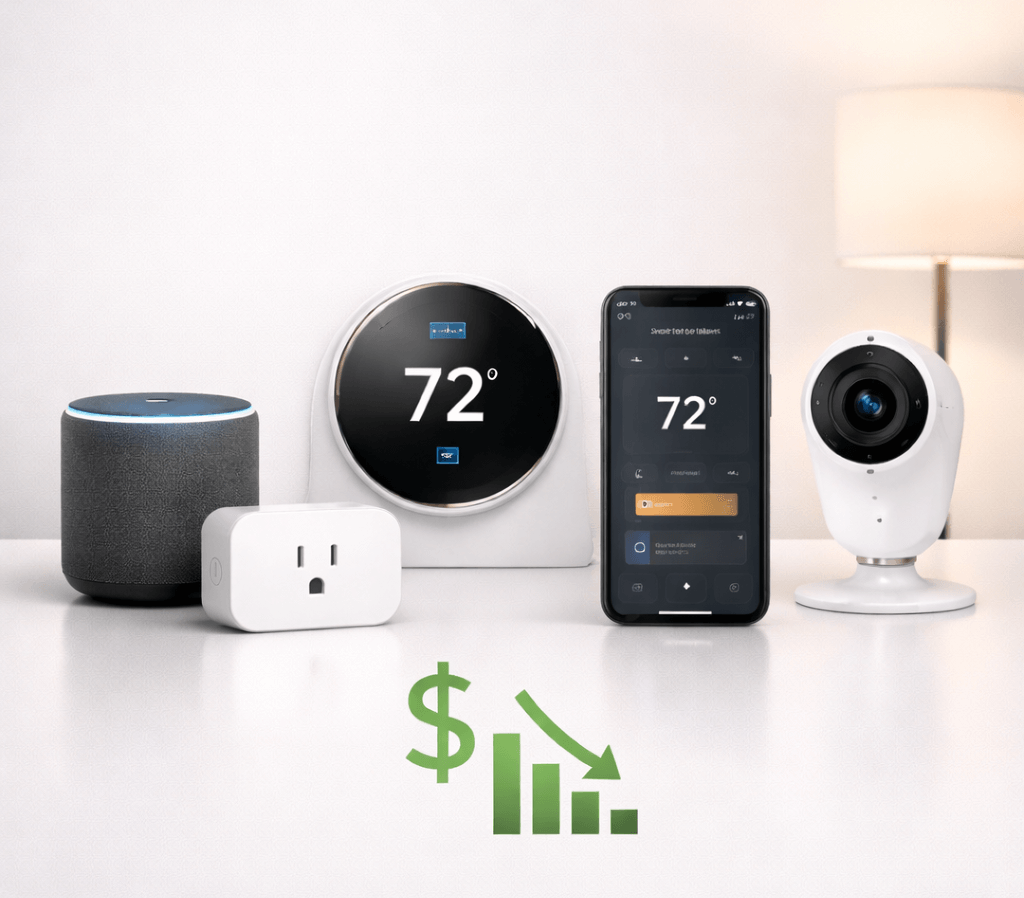
Smart home gadgets help reduce monthly bills by monitoring energy usage, automating appliances, and optimising heating, lighting, and water systems. Devices such as smart thermostats, energy monitors, and intelligent plugs enable homeowners to control consumption in real time, minimise waste, and lower utility costs efficiently.
In 2026, the smart home has evolved beyond mere convenience; it’s now a powerful tool for financial optimization. With rising utility costs and a growing awareness of environmental impact, homeowners are actively seeking ways to trim their monthly expenses. The good news? A new generation of smart home gadgets is specifically designed to tackle this challenge, offering more than just automation – they deliver tangible savings.
This article explores the best smart home gadgets that can significantly reduce your monthly bills, from electricity and water to even insurance premiums. We’ll delve into how these intelligent devices work, their potential for savings, and why they’re becoming essential investments for the financially savvy homeowner.
1. Smart Thermostats: Mastering Climate Control (Electricity/Gas Bills)
Heating and cooling typically account for 50-70% of a home’s energy consumption. A smart thermostat isn’t just a fancy digital display; it’s a climate control optimization hub.
- How they save:
- Learning Algorithms: They learn your schedule and preferences, automatically adjusting temperatures to save energy when you’re away or asleep.
- Geofencing: Uses your phone’s location to know when you leave and return, setting the house to an eco-friendly temperature while you’re out and warming/cooling it just before you arrive.
- Zoning (Advanced): For homes with multiple thermostats, they can manage different areas independently, ensuring you only heat or cool the rooms you’re using.
- Energy Reports: Provide detailed insights into your energy usage, helping you identify patterns and areas for improvement.
- Grid Optimization (2026 Feature): Many models now integrate with utility demand response programs, slightly adjusting temperatures during peak hours to save you money and support the grid.
- Top Picks: Ecobee Smart Thermostat Premium, Google Nest Learning Thermostat (5th Gen), Honeywell Home T10 Pro Smart Thermostat.
- Potential Savings: Up to 15-25% on heating and cooling bills, translating to $150-$400+ annually for an average household.
2. Smart Lighting Systems: Illuminating Efficiency (Electricity Bills)
As discussed in previous articles, lighting is a significant, yet often overlooked, area for energy savings. Smart lighting solutions offer far more than just remote control.
- How they save:
- LED Efficiency: The foundation is highly efficient LED bulbs, which use up to 90% less energy than incandescents.
- Automated Scheduling: Lights turn on/off based on your schedule, sunrise/sunset, or even geofencing.
- Motion/Occupancy Sensors: Lights only activate when a room is occupied and turn off automatically when empty.
- Daylight Harvesting: Sensors detect natural light and dim artificial lights accordingly, using free sunlight first.
- Dimming: Reducing brightness by even 20% can disproportionately save energy.
- Top Picks: Philips Hue, Lutron Caséta, Sengled Smart LED.
- Potential Savings: 70-90% reduction in lighting-related electricity consumption, saving $70-$180+ annually for an average home.
3. Smart Plugs: Eliminating “Phantom Load” (Electricity Bills)
Many devices continue to draw power even when “off” – this is known as “vampire power” or “phantom load.” Smart plugs are a simple, affordable solution.
- How they save:
- Remote Power Cut-off: You can remotely turn off devices completely from your phone, eliminating standby power drain.
- Scheduling: Program devices (e.g., coffee makers, phone chargers, entertainment systems) to power off completely overnight or when you’re at work.
- Energy Monitoring: Some smart plugs (e.g., TP-Link Kasa Smart Wi-Fi Plug w/ Energy Monitoring) track the energy usage of connected devices, helping you identify major phantom load culprits.
- Top Picks: TP-Link Kasa Smart Plugs, Wemo Smart Plug, Amazon Smart Plug.
- Potential Savings: While individual device savings are small, cumulative phantom load can account for 5-10% of your electricity bill. Smart plugs can save $50-$100+ annually by eliminating this waste. Learn more at TechToTable’s Energy Saving Guides
4. Smart Water Leak Detectors & Shut-off Valves (Water Bills & Insurance)
Water damage is a homeowner’s nightmare, leading to costly repairs and inflated water bills from unseen leaks. Smart water solutions offer proactive protection.
- How they save:
- Early Leak Detection: Small, battery-powered sensors placed near appliances (water heaters, washing machines, toilets) detect moisture and alert your phone instantly.
- Automatic Shut-off: More advanced systems connect to a main water shut-off valve, automatically cutting off the water supply to your entire home the moment a leak is detected, preventing catastrophic damage.
- Top Picks: Flo by Moen, LeakSmart, Phyn Plus, Resideo Wi-Fi Water Leak Detector.
- Potential Savings:
- Water Bills: Identify and stop small, continuous leaks (e.g., running toilets, dripping faucets) that can add hundreds of dollars to annual water bills.
- Insurance Premiums/Claims: Preventing major water damage can save you thousands in repair costs and potentially lead to lower insurance premiums (some insurers offer discounts for these systems). A single catastrophic leak can cost tens of thousands in damage.
5. Smart Blinds & Shades (Electricity/Gas Bills)
Just like smart thermostats manage your HVAC, smart window treatments manage solar gain and heat loss.
- How they save:
- Automated Sunlight Control: Shades can automatically open in winter to allow passive solar heating and close in summer to block heat, reducing reliance on your HVAC.
- Scheduling: Program blinds to close during the hottest part of the day or open in the morning to leverage natural light.
- Integration: Many integrate with smart thermostats, adjusting based on indoor temperature or outdoor weather conditions.
- Top Picks: Lutron Serena Shades, Somfy, Ikea Fyrtur/Kadrilj.
- Potential Savings: Can contribute 5-10% to HVAC savings, potentially $50-$200 annually, especially in regions with extreme temperatures.
6. Smart Home Energy Monitors (All Utility Bills)
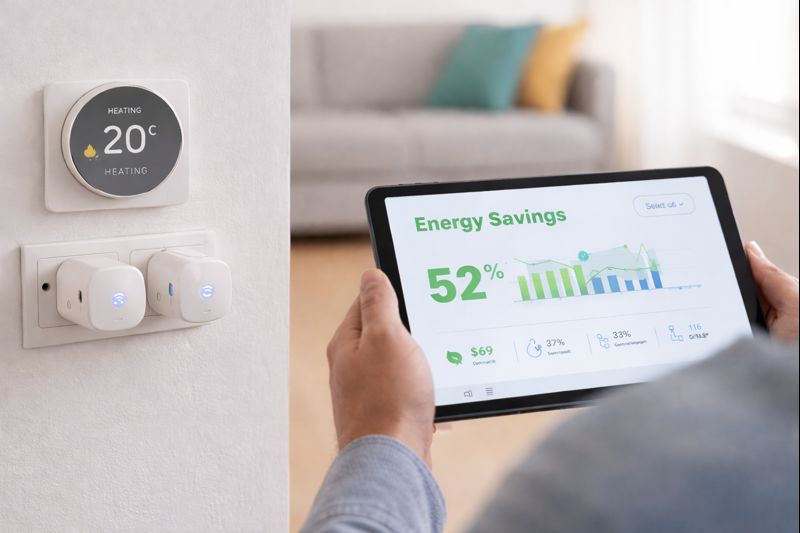
This is the ultimate tool for bill reduction, providing granular insight into your home’s total energy consumption.
- How they save:
- Real-time Data: See exactly how much electricity (and sometimes gas/water) your home is using at any given moment.
- Appliance Recognition: Advanced AI can identify individual appliances and their consumption patterns.
- Behavioral Change: The most powerful saving comes from the awareness it creates. When you see a direct correlation between your actions and your energy usage, you’re empowered to make smarter choices.
- Problem Detection: Flags unusual spikes or consistent high usage from specific circuits, indicating inefficient appliances or potential electrical issues.
- Top Picks: Sense Home Energy Monitor, Emporia Vue, Currant Energy Monitoring Smart Plugs.
- Potential Savings: By providing the data needed to make informed decisions and fostering behavioral change, these systems can lead to 5-20% overall utility bill reductions, potentially $100-$500+ annually. Learn more at TechToTable’s Energy Saving Guides.
| Device Type | Average Savings | Main Benefit | Price Range | Best For |
|---|---|---|---|---|
| Smart Thermostat | 10–25% | Heating optimisation | £100–£250 | Whole homes |
| Smart Plugs | 5–15% | Cut standby power | £15–£40 | Small devices |
| LED Smart Lights | 5–12% | Lighting efficiency | £20–£60 | Daily lighting |
| Energy Monitor | 8–20% | Usage tracking | £70–£180 | Bill analysis |
| Smart Water Controller | 5–10% | Water savings | £80–£200 | Families |
Frequently Asked Questions
Q1. Do smart gadgets really reduce electricity bills?
Yes. By monitoring and controlling usage, smart devices reduce unnecessary energy waste.
Q2. Which smart device saves the most money?
Smart thermostats usually offer the highest savings for most homes.
Q3. Are smart plugs worth buying?
Yes. They are affordable and prevent energy loss from standby devices.
Q4. How long does it take to recover the investment?
Most users recover costs within 6–18 months through savings.
Q5. Can renters use smart energy devices?
Yes. Many devices are portable and require no permanent installation.
Conclusion: Investing in Intelligence for Your Wallet
The upfront cost of some smart home gadgets might seem daunting, but when viewed through the lens of long-term savings, they quickly become smart investments. From preventing costly water damage to meticulously optimizing your HVAC and lighting, these devices empower you to take control of your consumption and significantly reduce your monthly bills.
By strategically integrating these intelligent solutions into your home, you’re not just embracing the future of living; you’re actively creating a more efficient, sustainable, and financially savvy household. The question is no longer if smart home gadgets can save you money, but how much they can save you. Learn more at TechToTable’s Energy Saving Guides