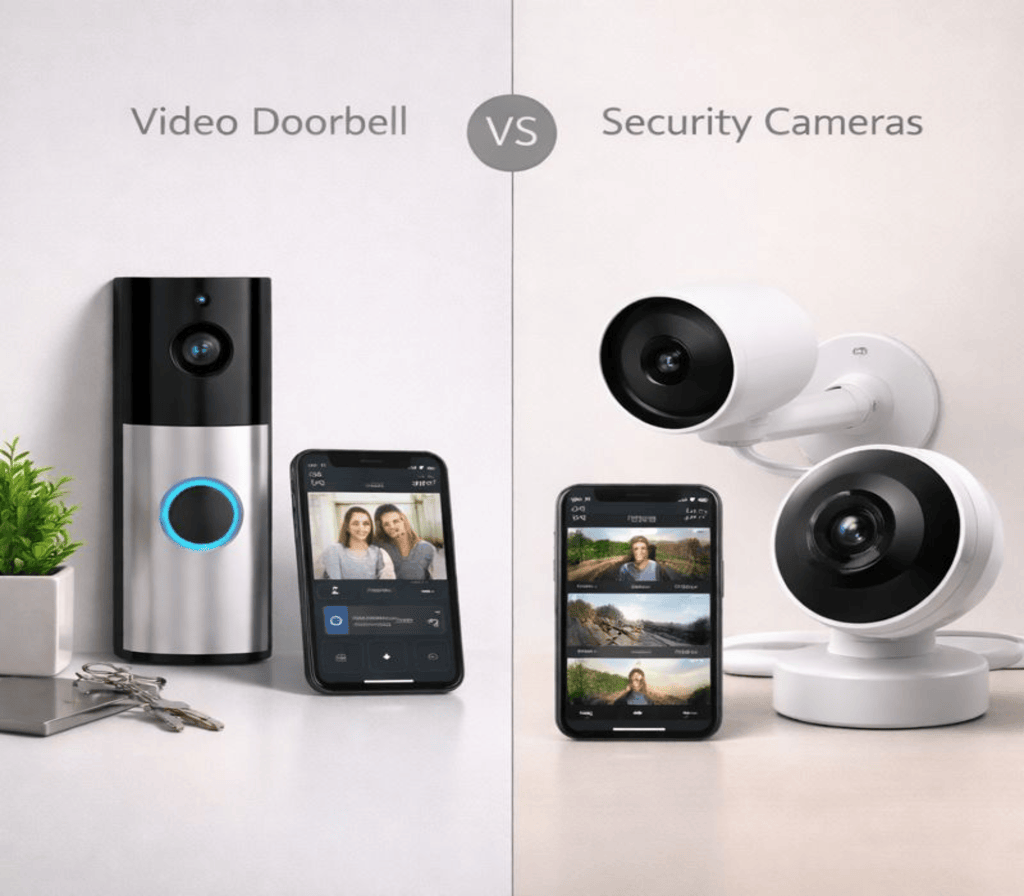
Apartment living comes with unique security challenges. You’re often dealing with shared hallways, common entrances, and a landlord’s rules about modifications. When it comes to enhancing your personal safety and monitoring your space, two popular smart home devices stand out: video doorbells and security cameras.
But which one is truly better suited for an apartment? This article will dive deep into the functionalities, advantages, and limitations of both video doorbells and security cameras, helping apartment dwellers make an informed decision for their specific security needs. We’ll explore installation considerations, privacy concerns, and overall effectiveness in a multi-unit dwelling.
1. Video Doorbells: The Front-Line Guardian for Your Entryway
A video doorbell, such as a Ring or Arlo model, replaces your traditional doorbell with a smart device equipped with a camera, microphone, speaker, and motion sensor.
Key Features & Apartment Relevance:
- Two-Way Audio: Speak to visitors, delivery drivers, or even potential threats directly from your smartphone, whether you’re home or not. This is invaluable for screening unexpected guests or providing instructions for package delivery when you’re out.
- Motion Detection & Alerts: Get instant notifications on your phone when someone approaches your apartment door. This is crucial for monitoring activity in shared hallways.
- Live View & Recording: Access a live feed of your entryway at any time and review recorded footage (usually with a subscription). This allows you to see who has been at your door even if they didn’t ring the bell.
- Night Vision: Most modern video doorbells offer clear night vision, ensuring round-the-clock monitoring.
- Installation (Crucial for Apartments):
- Wired: Many video doorbells connect to existing doorbell wiring. This is generally preferred for reliability but requires your apartment to have a functioning wired doorbell.
- Battery-Powered: An excellent option for apartments without existing wiring or for those who prefer not to alter their unit’s electrical system. These are typically easy to install with adhesive mounts or screws.
- Privacy Considerations: Given shared hallways, capturing too much public space can raise privacy concerns for neighbors. Most video doorbells allow you to set “motion zones” to focus only on your immediate doorway.
Advantages for Apartments:
- Specific Entryway Focus: Designed to monitor the most critical entry point of your apartment.
- Convenience: Integrates directly with your existing doorbell function.
- Deterrence: The visible presence of a camera can deter package theft and unwanted solicitors.
- Package Protection: Ideal for monitoring deliveries and preventing “porch piracy” (or rather, “hallway piracy”).
Limitations for Apartments:
- Limited Field of View: Primarily focuses on your immediate door area. It won’t show you the hallway further down or a common stairwell.
- Power/Wiring Issues: If your apartment lacks existing doorbell wiring or power, you’ll be reliant on battery-powered models, which require periodic recharging.
- Landlord Approval: While less intrusive than a full security camera, some landlords may still have rules about attaching anything to the exterior of your doorframe or common areas.
2. Security Cameras: Broader Surveillance, Versatile Placement
Security cameras are standalone devices designed for broader surveillance. They come in various forms, from compact indoor cameras to robust outdoor models.
Key Features & Apartment Relevance:
- Wider Field of View: Often offer wider angles, pan/tilt/zoom capabilities, or fisheye lenses, allowing them to cover more area.
- Flexible Placement: Can be placed indoors looking out, or in permitted outdoor areas. This versatility is key for apartments.
- Continuous Recording Options: Many offer 24/7 continuous recording (often cloud-based or local storage), providing a more comprehensive history than event-triggered doorbell recordings.
- Advanced Analytics: Some cameras offer AI-powered person detection, facial recognition, or even pet detection, reducing false alarms.
- Installation (Crucial for Apartments):
- Indoor Cameras: Plug into an outlet and connect to Wi-Fi. Can be placed on shelves, tables, or mounted discreetly. Excellent for monitoring inside your apartment, or positioned strategically to view the doorway from inside.
- Outdoor Cameras: Require more robust mounting and weatherproofing. Often battery-powered or plug into an outdoor outlet. Crucially, most apartment leases prohibit drilling into exterior walls or common areas.
- Privacy Considerations: A security camera’s broader view can easily capture neighboring units or public spaces, making careful placement and clear communication with neighbors essential.
Advantages for Apartments:
- Comprehensive Coverage: Can monitor larger areas, either inside your apartment or (if permitted) a wider view of the hallway or balcony.
- Versatility: Can be used to monitor pets, babysitters, or to simply check in on your home’s interior while away.
- Discreet Placement: Indoor cameras can be very discreet, making them less noticeable to visitors.
- No Doorbell Wiring Required: Most indoor cameras just need a power outlet.
Limitations for Apartments:
- External Installation Hurdles: Significant restrictions on mounting outdoor cameras to communal property or exterior walls. This often limits cameras to indoor-only use or placement on private balconies (if allowed).
- Privacy Concerns: Easier to accidentally capture neighbors’ activities, leading to potential disputes.
- Separate Function: Does not replace your doorbell, meaning you still need a traditional doorbell for visitors to announce their presence.
3. The Verdict: What’s Better for Your Apartment?
The “better” choice depends heavily on your primary security objective and apartment restrictions.
Choose a Video Doorbell If:
- Your primary concern is your front door and packages: You want to screen visitors, prevent package theft, and know who’s coming and going.
- You have existing doorbell wiring (ideal): This ensures reliable power and connectivity.
- You want a simple, focused solution: It’s designed for one purpose and does it well.
- You need landlord-friendly installation: Battery-powered models often require minimal to no permanent modification.
Choose a Security Camera If:
- Your primary concern is broader surveillance: You want to monitor a larger area inside your apartment, or a balcony (if permitted).
- You want to monitor pets or babysitters: An indoor camera is ideal for this.
- You have no doorbell wiring, or want maximum flexibility: Most indoor cameras are plug-and-play.
- You’re comfortable with careful placement to avoid privacy issues: For wider views.
The Hybrid Approach: Best of Both Worlds
For many apartment dwellers, the optimal solution is a combination:
- A battery-powered video doorbell: For the immediate entryway, package delivery, and screening visitors.
- One or two indoor security cameras: Strategically placed to monitor key areas inside your apartment, or positioned to discreetly view the hallway through your peephole or window (if safe and allowed).
This hybrid setup gives you robust front-door security combined with broader internal surveillance, without typically violating landlord agreements for exterior modifications.
Conclusion: Tailoring Security to Apartment Life
Navigating security in an apartment requires thoughtful consideration of both technology and community guidelines. While video doorbells excel at front-line entry monitoring and security cameras offer versatile surveillance, understanding their specific strengths and limitations is key. By assessing your personal needs, checking your lease agreement, and prioritizing privacy, you can effectively leverage smart home technology to create a safer, more monitored apartment environment.