In 2026, the average UK family of four wastes nearly £1,000 worth of edible food every year — roughly £83 straight into the bin each month. Much of this waste happens not because of neglect, but because food is forgotten, duplicated, or expires unnoticed.
This raises an important question: Can smart fridges actually reduce food waste, or are they just expensive tech upgrades?
Modern smart refrigerators now include AI-powered inventory tracking, expiry alerts, and predictive freshness monitoring. In this guide, we break down whether these features truly make a difference — and whether the savings justify the investment.
Quick Answer: Do Smart Fridges Reduce Food Waste?
Yes — when used properly, smart fridges can reduce household food waste by 20–40% through real-time inventory tracking, expiry alerts, and AI-powered meal suggestions. For UK families spending £1,000 yearly on wasted food, this could mean savings of £200–£400 annually.
In this guide, we explore the specific 2026 technologies—from Matter-enabled connectivity to predictive freshness sensors—that are helping British families build a more efficient, cost-effective, and sustainable kitchen.
The Growing Problem of Food Waste
According to recent studies, the average household wastes hundreds of pounds’ worth of food each year. Common reasons include:
- Forgetting items at the back of the fridge
- Buying duplicates
- Misjudging expiry dates
- Poor meal planning
- Over-purchasing groceries
Busy schedules, lack of organisation, and poor visibility inside traditional refrigerators all contribute to this problem. Smart fridges aim to eliminate these issues through digital management and automation.
What Is a Smart Fridge?
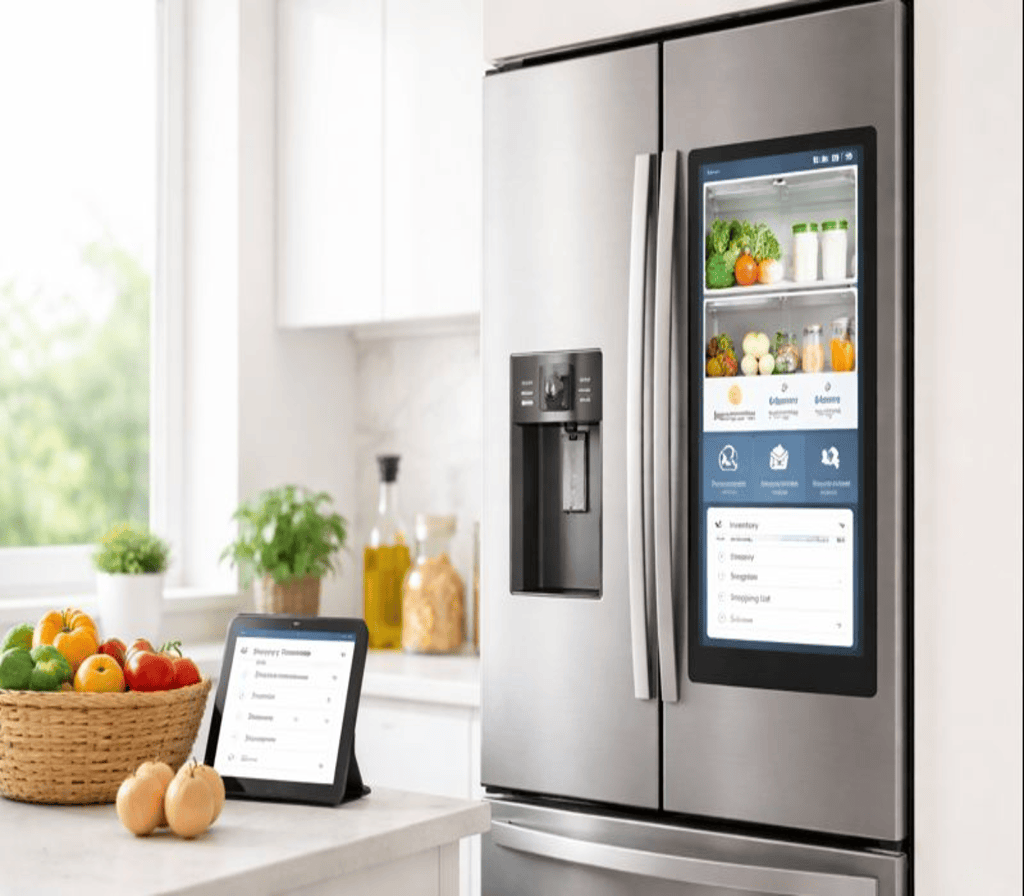
A smart fridge is a connected refrigerator equipped with sensors, cameras, and software that allows users to monitor and manage food digitally. These appliances connect to smartphones, tablets, or home assistants via Wi-Fi.
Unlike traditional fridges, smart models provide:
- Real-time food monitoring
- Digital inventory management
- Automated notifications
- Shopping assistance
- Data-based food usage insights
They turn your refrigerator into a central hub for food organisation.
1. Inventory Tracking: Knowing What You Have at All Times
One of the most valuable features of smart fridges is inventory tracking.
How It Works
Smart fridges use internal cameras and barcode scanning to identify and record items placed inside. Some models allow manual entry through mobile apps.
Users can view their fridge contents remotely on their phones, even while shopping.
Benefits of Inventory Tracking
- Prevents buying duplicate items
- Helps plan meals efficiently
- Improves food visibility
- Reduces forgotten products
- Saves shopping time
Real-Life Example
Imagine being in a supermarket and wondering whether you still have milk at home. Instead of guessing, you check your phone and see your fridge inventory instantly. This prevents unnecessary purchases and waste.
2. Expiry Alerts: Never Miss a Use-By Date Again
Expiry management is one of the biggest challenges in food storage. Smart fridges solve this problem through automated alerts.
How Expiry Alerts Work
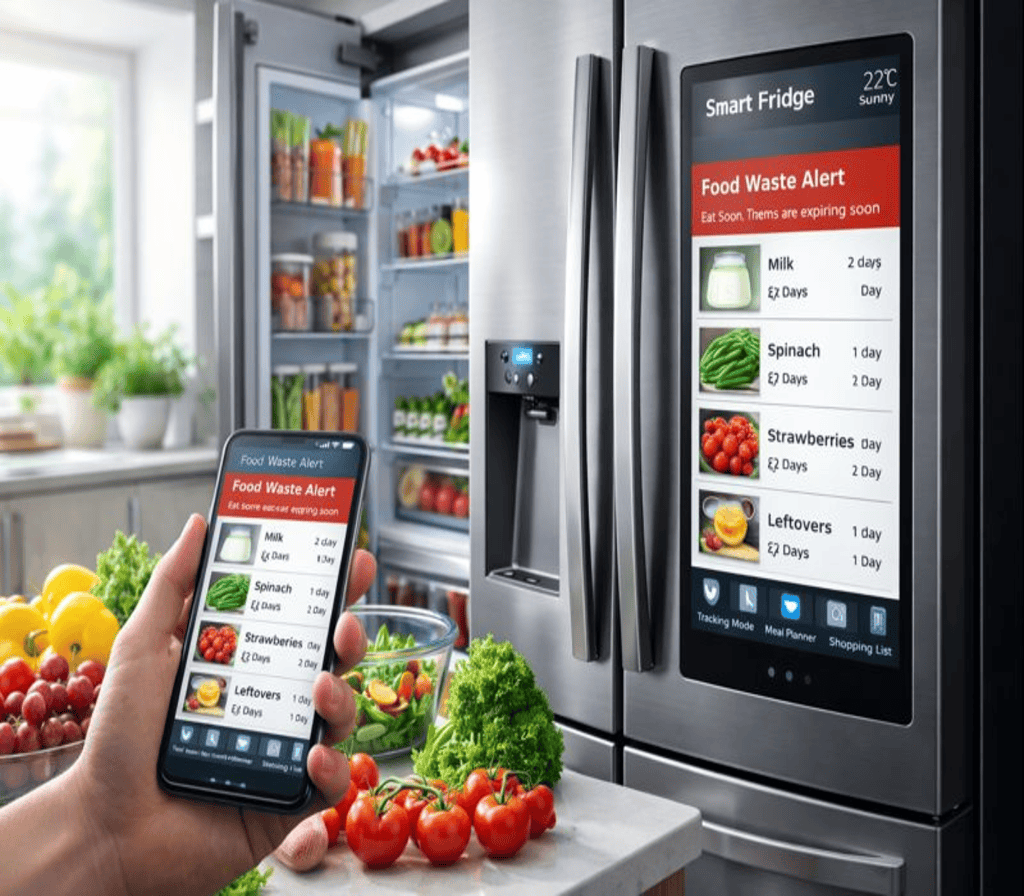
When you add an item, the system records its expiry date. As the date approaches, you receive notifications on your smartphone or fridge display.
Some models also suggest recipes using soon-to-expire ingredients.
Benefits of Expiry Alerts
- Reduces spoiled food
- Encourages timely consumption
- Improves health and safety
- Promotes responsible storage
- Minimises emergency disposal
Why This Matters
Many households throw away food simply because they forget it exists. Expiry alerts act as digital reminders that ensure food is used before it becomes unsafe.
3. Integrated Shopping Lists: Smarter Grocery Planning
Another powerful feature of smart fridges is automated shopping list creation.
How It Works
When items run low or are removed from the fridge, the system updates your shopping list automatically. This list syncs with your mobile device and can even integrate with online grocery platforms.
Advantages of Smart Shopping Lists
- Prevents overbuying
- Improves budget control
- Saves time
- Enhances meal planning
- Supports online ordering
Example in Daily Life
If you finish your last yogurt, the fridge adds it to your shopping list. When you next visit the shop, everything you need is already organised.
How These Features Work Together
The true power of smart fridges lies in combining these technologies.
A Complete System
Inventory tracking shows what you have.
Expiry alerts remind you when to use it.
Shopping lists help you replace only what is needed.
Together, they create a fully automated food management system.
Result
- Less waste
- Better budgeting
- Healthier eating
- Reduced stress
- Improved organisation
Environmental Benefits of Smart Fridges
Smart Fridge food waste reduction has a direct positive impact on the environment.
Smart Fridge Food Waste Reduction Environmental Impact
- Lower landfill waste
- Reduced methane emissions
- Decreased resource consumption
- Improved sustainability
When households waste less food, fewer natural resources are required for farming, transport, and packaging.
Smart fridges support environmentally responsible living.
Financial Benefits for Families
Food waste is essentially wasted money.
How Smart Fridges Save Money
- Reduce unnecessary purchases
- Prevent spoiled food
- Encourage planned meals
- Lower weekly grocery bills
Over time, these savings can easily justify the cost of a smart appliance.
Are Smart Fridges Easy to Use?
Many people worry that smart appliances may be complicated. In reality, modern models are designed for simplicity.
User-Friendly Features
- Touchscreen displays
- Mobile apps
- Voice assistants
- Guided setup
- Automatic updates
Most users become comfortable within a few days of use. Learn more at TechToTable’s Smart Home Guides
Who Should Consider a Smart Fridge?
Smart fridges are particularly beneficial for:
- Busy families
- Working professionals
- Health-conscious individuals
- Large households
- Eco-conscious consumers
Anyone who values efficiency and organisation can benefit from this technology.
Things to Consider Before Buying
Before investing in a smart fridge, consider the following:
1. Budget
Smart models are more expensive than standard fridges.
2. Internet Connection
A stable Wi-Fi connection is essential.
3. App Compatibility
Check compatibility with your smartphone.
4. Privacy Settings
Ensure data security features are strong.
5. After-Sales Support
Choose brands with reliable service networks.
Future of Smart Refrigeration
The future of smart fridges looks promising. Upcoming innovations include:
- AI-powered meal planning
- Voice-controlled inventory updates
- Advanced spoilage detection
- Nutritional analysis
- Automated food ordering
These developments will make kitchens even more intelligent and waste-efficient.
Are Smart Fridges Worth the Investment in the UK?
A smart fridge in the UK typically costs between £900 and £2,500, compared to £400–£800 for standard models. However, if a household reduces food waste by even £300 annually, the additional investment may balance out within 3–5 years.
Frequently Asked Questions (FAQ Section)
1. Do smart fridges really help reduce food waste?
Smart fridges help reduce food waste by tracking stored items, sending reminders, and improving meal planning. Results vary depending on usage habits and household size.
2. Are smart fridges difficult to use for beginners?
No, most modern smart fridges are designed with user-friendly interfaces, mobile applications, and simple setup processes. Even users with limited technical experience can operate them comfortably within a short time.
3. Do smart fridges consume more electricity than regular fridges?
Not necessarily. Many smart fridges are energy-efficient and come with inverter technology and eco-modes. When used correctly, they can be as energy-efficient as traditional models.
4. Can smart fridges work without an internet connection?
Basic cooling functions work without internet access. However, advanced features such as inventory tracking, remote monitoring, and automated alerts require a stable Wi-Fi connection.
5. Are smart fridges worth the higher price?
For households that value organisation, reduced food waste, and long-term savings, smart fridges are often worth the investment. Over time, reduced grocery expenses can help balance the initial cost. Learn more at TechToTable’s Smart Home Guides
Final Thoughts
Smart fridges are more than luxury appliances. They are practical tools that help families reduce food waste, save money, and live more sustainably.
Through inventory tracking, expiry alerts, and integrated shopping lists, these devices bring structure and efficiency to modern kitchens. They eliminate guesswork, improve planning, and ensure that food is used wisely.
For households seeking better organisation and responsible consumption, investing in a smart fridge can be a smart step towards a greener and more economical future. You can also check our article on smart coffee machines.