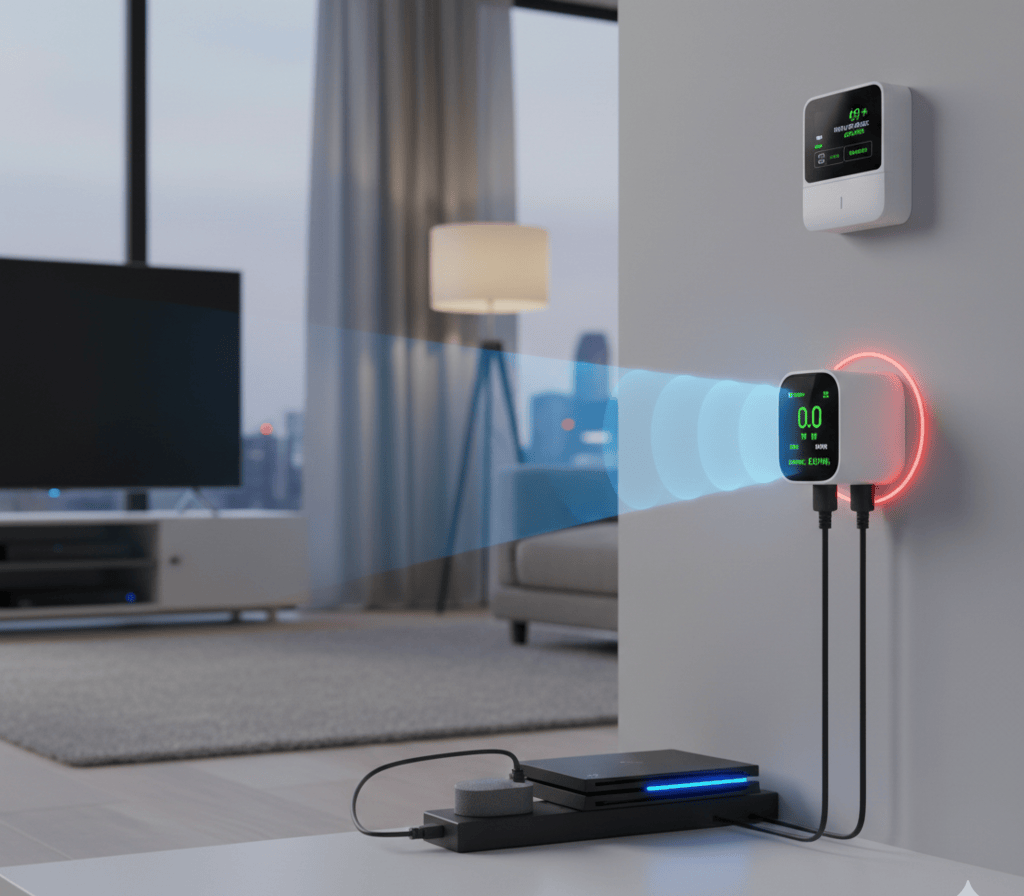
In the early months of 2026, the British energy landscape remains a complex environment for homeowners. Despite the government’s push toward net-zero and the stabilization of wholesale gas prices, the Ofgem Energy Price Cap (currently sitting at approximately £1,758 per year for a typical household) continues to put pressure on monthly budgets.
As a result, “Energy Management” has transitioned from a niche hobby for tech enthusiasts into a mainstream financial strategy. At the heart of this strategy lies the smart plug. Small, relatively inexpensive, and easy to install, these devices are marketed as the ultimate weapon against energy waste. But a critical question remains: Do smart plugs actually save more money than they cost to run?
This guide provides a definitive answer by analyzing the “Vampire Power” phenomenon, the evolution of Matter 1.3 monitoring tech, and the raw ROI (Return on Investment) calculations for UK households in 2026.
1. The Financial Impact of “Vampire Power” in 2026
The term “Vampire Power” (or standby power) refers to the electricity consumed by electronic devices while they are switched off or in standby mode. In the UK, where many households still rely on older, less efficient appliances, this “silent drain” is a significant contributor to high bills.
The Standby Bill Breakdown
According to 2026 data from the Energy Saving Trust and Green Match, the average UK home loses between £55 and £147 per year simply by leaving devices on standby. With electricity unit rates averaging 27.69p per kWh as of January 2026, even a few watts of constant draw can add up to the cost of a weekly grocery shop over the course of a year.
Typical Annual Standby Costs (2026 UK Prices):
- Television & Soundbar: £24.00 – £35.00
- Games Consoles (PS5/Xbox Series X): £23.82 (due to background updates)
- Desktop Computer & Monitor: £11.59
- Modem/Router: £16.53 (though these are rarely turned off)
- Kitchen Gadgets (Microwaves/Coffee Machines): £5.00 – £12.00
The Smart Plug Solution: By physically cutting the circuit via a smart plug, you reduce this drain to near zero. However, a smart plug itself is a “vampire” because it needs a constant Wi-Fi or Thread connection. In 2026, a high-efficiency smart plug draws about 0.5W to 1.1W, costing roughly £1.50 to £2.80 per year. If the device it is “killing” saves you £23.00, your net gain is over £20.00.
2. Beyond Standby: The Power of Energy Monitoring
The biggest evolution in 2026 is the widespread adoption of Energy Monitoring features in mid-range plugs like the TP-Link Tapo P110M. In previous years, homeowners could only guess which appliances were the “hogs.” Today, the data is granular and real-time.
Identifying “Phantom Loads”
Energy monitoring allows you to see the Live Wattage of any connected device. For a UK homeowner, this is crucial for:
- Fault Detection: A fridge-freezer that is five years old might have a failing seal, causing the compressor to run 80% of the time. Monitoring the plug for 24 hours can reveal this spike, prompting a repair that could save £100+ annually.
- Behavioural Shifts: Many British consumers are shocked to realize that their “Eco” cycle on the dishwasher actually uses more electricity (though less water) than a standard cycle. Real-time data ends the guesswork.
- Vampire Hunting: You might think your laptop charger isn’t drawing power when not connected to the computer, but monitoring often reveals a “ghost load” of 2W-3W.
3. ROI Calculations: The “Set and Forget” Savings
To determine if smart plugs are a wise investment, we must look at the Payback Period. In 2026, a high-quality Matter-certified smart plug costs between £12 and £20.
Case Study: The Living Room Media Centre
A typical UK media setup includes a 55″ OLED TV, a soundbar, and a games console.
- Combined Standby Draw: 18W
- Hours on Standby per Day: 20 hours
- Daily Waste: 360Wh (0.36 kWh)
- Monthly Waste: 10.8 kWh
- Monthly Cost (at 27.69p/kWh): £2.99
- Annual Cost: £35.88
Investment ROI:
If you buy a smart plug for £15.00, it pays for itself in just 5 months. Over the 10-year lifespan of the plug, it will have saved you over £300.00, representing an ROI of over 2,000%. “For more expert advice on reducing utility bills, explore our full library of [TechToTable Energy Saving Guides].”
4. Advanced Scheduling and Time-of-Use (TOU) Tariffs
By 2026, nearly 75% of UK households have a smart meter installed. This has led to the explosion of Time-of-Use tariffs (such as Octopus Agile or British Gas PeakSave). In these models, electricity is significantly cheaper (or sometimes even free) during periods of low demand or high renewable generation.
Automating the Savings
Smart plugs allow you to “time-shift” your energy consumption without manual intervention:
- Dehumidifier Management: Many UK homes battle dampness during the winter. By scheduling a dehumidifier to run only between 2:00 AM and 5:00 AM (during the off-peak “lull”), you can maintain a dry home at 40% of the usual cost.
- EV Accessory Charging: While EVs have their own chargers, secondary items like e-bike batteries or power tools can be scheduled to charge during the cheapest window of the night.
- Seasonal Lighting: Christmas lights or garden lighting can be synced to Sunset/Sunrise triggers, ensuring they are never accidentally left on during daylight hours.
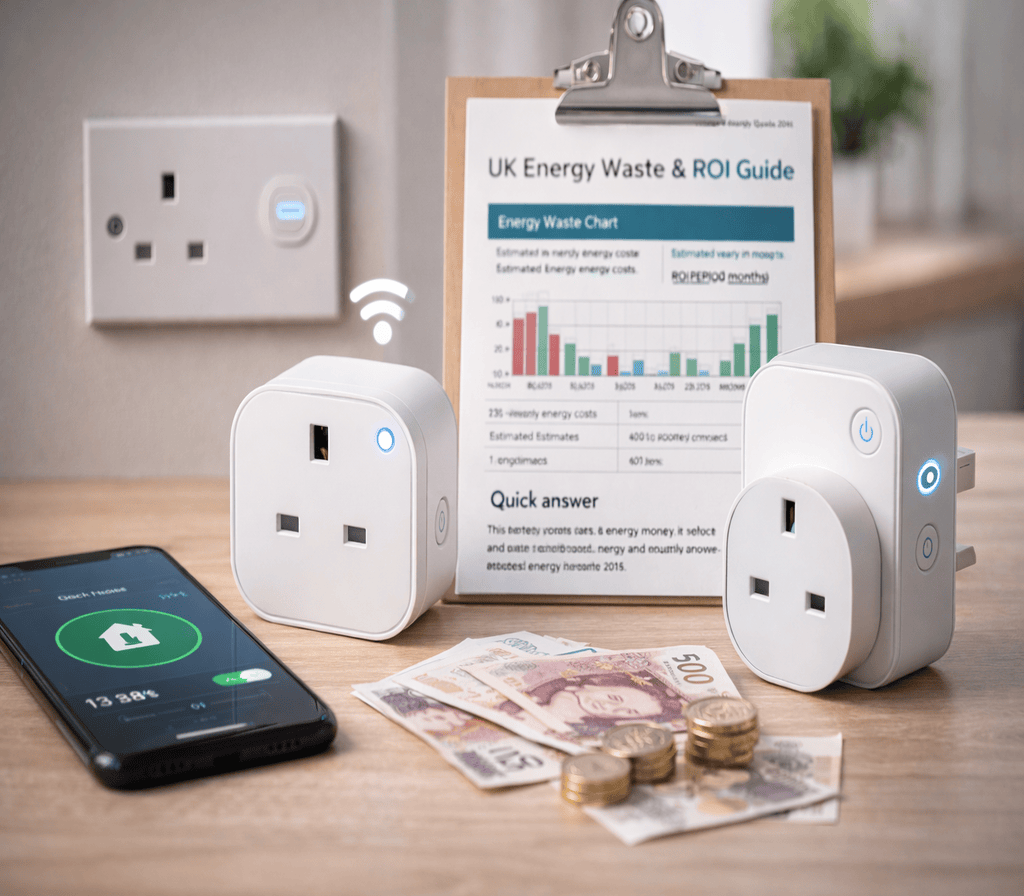
5. The “Matter 1.3” Revolution and System Synergies
2026 is the year of Matter 1.3. This new smart home standard has revolutionized energy management by allowing different brands to “talk” to each other with 100% reliability.
Why Matter 1.3 is a Game-Changer for UK Bills:
Previously, if you had an Amazon Echo and a Tapo plug, the energy data stayed inside the Tapo app. With Matter 1.3, that data is shared across your entire ecosystem.
- Hyper-Automations: You can now set a rule: “If my Hive Thermostat detects the house is empty, turn off all Smart Plugs in the Office and Living Room.” * Unified Dashboards: You no longer need five different apps to see your total energy consumption. A single dashboard (like Apple Home or Home Assistant) can aggregate every smart plug’s data to show a “Whole Home” waste report.
6. When NOT to Use a Smart Plug
Despite the benefits, smart plugs are not a “magic bullet.” Using them on the wrong appliances can actually cost you money or damage your equipment.
- High-Heat Appliances: Avoid using smart plugs on 3kW heaters, tumble dryers, or ovens unless the plug is specifically rated for high-amperage loads (13A/16A). Constant high-wattage draw can melt the internal relays of cheap plugs.
- OLED TVs: Be careful! Many modern OLED TVs perform “pixel cleaning” cycles in standby mode to prevent screen burn-in. If you cut the power immediately after turning the TV off, you may damage the panel over time. Expert Tip: Set your smart plug to turn off 2 hours after your usual bedtime to allow these cycles to finish.
- Low-Drain LEDs: Using a £15 smart plug to control a 5W LED bulb is a financial mistake. The plug will take 15+ years to pay for itself. In these cases, a simple manual switch is better.
7. Scam Alert: “Eco-Plugs” and “Voltage Stabilisers”
A crucial warning for the UK market in 2026: The “Energy-Saving Plug” Scam.
The Guardian and Which? have reported a surge in social media adverts for small boxes that claim to “reduce your bills by 40%” by stabilizing your voltage.
The Reality: These are dangerous, empty plastic shells. A real smart plug saves money by stopping the flow of electricity. It does not change the physics of how your appliances use power. Only buy from trusted brands like TP-Link (Tapo/Kasa), Eve, Meross, or Amazon.
Final Verdict: Are Smart Plugs Worth It in 2026?
The “Official Verdict” for British homeowners is a resounding Yes, provided you follow the “10W Rule”. If an appliance draws more than 10 Watts on standby, or if it can be shifted to an off-peak tariff, a smart plug is one of the highest-yielding investments you can make in your home.
For the average UK three-bedroom semi-detached home, a strategic deployment of five smart plugs (costing ~£75) can yield an annual saving of £110 to £130. Within 9 months, the devices have paid for themselves, and for every year thereafter, that money stays in your pocket rather than going to the energy supplier. “For more expert advice on reducing utility bills, explore our full library of [TechToTable Energy Saving Guides].”
TechToTable Recommended 2026 UK Smart Plugs
| Model | Key Feature | Best For |
| TP-Link Tapo P110M | Matter 1.3 & Monitoring | Most UK Households (Best ROI) |
| Eve Energy (UK) | Thread Support & Privacy | Apple Home Users / Stability |
| Meross Smart Power Strip | Individual Socket Control | Media Centres / Home Offices |
| Tapo P110 (Non-Matter) | Budget Energy Tracking | Simple “Vampire Killing” |