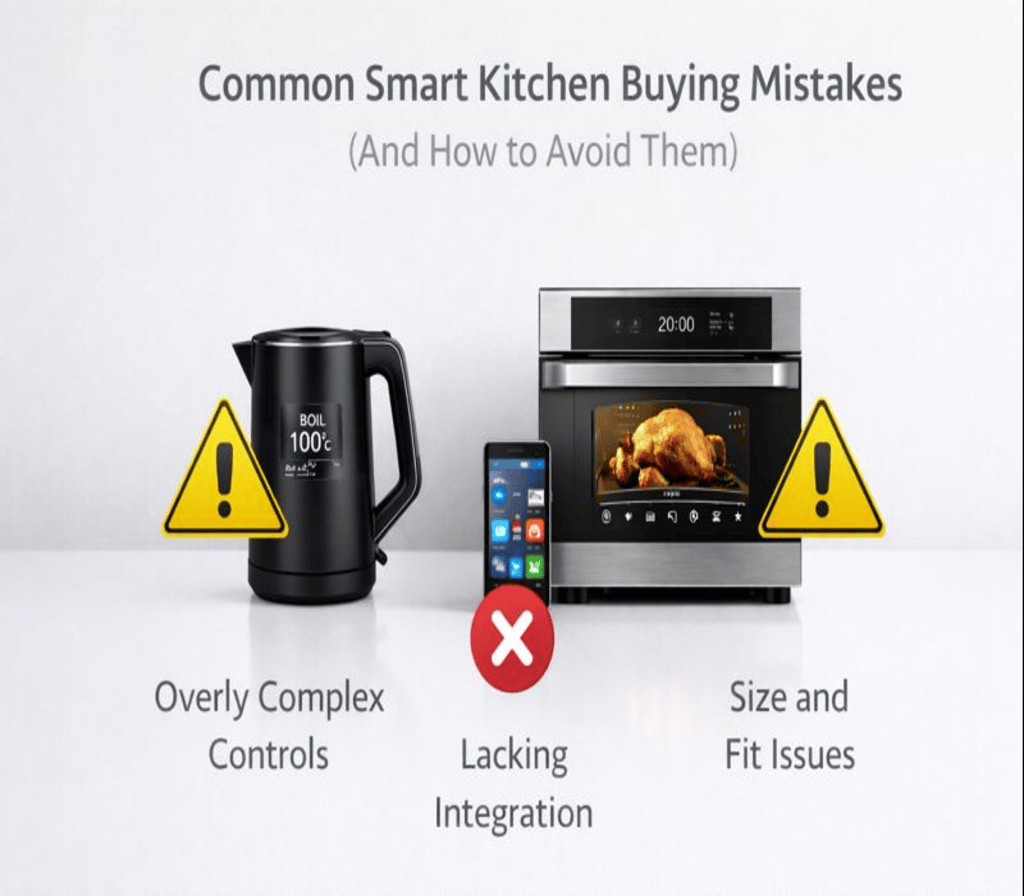
The allure of a smart kitchen is powerful: effortless cooking, energy savings, and a touch of futuristic convenience. Yet, in 2026, the market is flooded with devices, and not all “smart” is truly intelligent. Many homeowners jump into smart kitchen upgrades without a clear strategy, leading to expensive regrets and frustrating experiences.
This guide will expose the most common smart kitchen buying mistakes and, more importantly, equip you with the knowledge to avoid them. From overlooked compatibility issues to falling for flashy but useless features, we’ll ensure your journey to a smarter kitchen is smooth, efficient, and genuinely worthwhile.
1. Mistake: Ignoring Ecosystem Compatibility (The “Walled Garden” Trap)
This is arguably the biggest and most common mistake. Many buyers purchase individual smart gadgets from different brands, assuming they will all “just work together.” In reality, without a unifying standard, you end up with a collection of isolated devices that can’t communicate.
- The Problem: Your Samsung fridge can’t tell your GE oven to preheat, and your KitchenAid mixer won’t sync with your Google Assistant. You’ll be managing five different apps and experiencing zero seamless automation.
- The Fix: Embrace Matter. In 2026, Matter is the universal smart home standard designed to fix this. Look for the “Matter-Certified” logo on every smart appliance you buy. This ensures that your devices (regardless of brand) can communicate with each other and with your central smart home hub (like Apple HomeKit, Google Home, Amazon Alexa, or Samsung SmartThings).
- Actionable Advice: Before buying, decide on your primary smart home ecosystem (e.g., “I’m an Alexa household”). Then, verify that every new appliance is compatible with both Matter and your chosen ecosystem.
2. Mistake: Prioritizing “Smart” Over “Core Functionality”
A common pitfall is to get dazzled by a smart feature and overlook the appliance’s fundamental purpose. A smart oven that struggles to maintain consistent temperature or a smart dishwasher that cleans poorly isn’t worth it, no matter how many apps it connects to.
- The Problem: You paid extra for a Wi-Fi-enabled coffee maker, but it leaks or brews bitter coffee. The “smart” aspects become irrelevant if the basic function fails.
- The Fix: Read Core Reviews First. Before diving into smart features, research the appliance’s core performance. Does the refrigerator keep food fresh? Does the dishwasher clean effectively? Does the oven cook evenly? Only once you’re satisfied with its primary function should you evaluate its smart capabilities.
- Actionable Advice: Check independent consumer reviews and ratings for the non-smart version of the appliance first. If the basic model isn’t highly rated for its primary function, the smart version likely won’t be either.
3. Mistake: Overpaying for “Gimmicky” Smart Features
Not all smart features are created equal. Some offer genuine time and energy savings, while others are simply expensive novelties.
- The Problem: Features like a refrigerator with a built-in tablet for doodling, or a smart toaster that costs three times more to make toast slightly faster, often provide little real-world value over time.
- The Fix: Identify Your Pain Points. What are your biggest frustrations in the kitchen?
- Food waste? A smart fridge with inventory tracking is valuable.
- Time managing chores? A smart dishwasher with off-peak scheduling is valuable.
- Struggling with recipes? An AI-guided oven is valuable. If a smart feature doesn’t directly address a problem or save significant time/money, it’s likely a gimmick.
- Actionable Advice: Make a list of your top 3 kitchen frustrations. As you shop, ask, “Does this specific smart feature solve one of my problems?” If not, consider a more traditional, high-quality appliance.
4. Mistake: Neglecting Your Home Network (Wi-Fi Black Holes)
Smart appliances rely heavily on a robust and reliable home Wi-Fi network. Older homes, especially those with thick walls or multiple floors, often have “dead zones” where Wi-Fi signals struggle.
- The Problem: Your smart oven constantly disconnects, your fridge’s camera won’t upload, or your voice commands lag. The “smart” features become frustratingly unreliable.
- The Fix: Assess and Upgrade Your Wi-Fi. Before investing in smart appliances, ensure your Wi-Fi coverage is strong throughout your kitchen.
- Test Signal Strength: Use a Wi-Fi analyzer app on your smartphone in various spots in your kitchen.
- Consider a Mesh Network: For larger or older homes, a mesh Wi-Fi system (like Eero or Google Nest Wifi Pro) creates a strong, consistent signal everywhere.
- Actionable Advice: Don’t buy a $3,000 smart fridge only to realize your $50 router from 2015 can’t handle it. Invest in your home network infrastructure first.
5. Mistake: Underestimating the Learning Curve and Privacy Concerns
Smart appliances often come with new interfaces, apps, and voice commands. There’s a learning curve, and for some, the privacy implications are a deal-breaker.
- The Problem: You spend more time troubleshooting apps than cooking, or you’re uncomfortable with a fridge camera tracking your eating habits.
- The Fix: “Test Drive” the Ecosystem.
- Start Small: Begin with one or two smaller smart gadgets (e.g., smart plugs for lamps, a smart coffee maker) to get comfortable with the concept of app and voice control.
- Read Privacy Policies: Understand what data your appliances collect and how it’s used. Some brands offer more robust privacy settings than others.
- Actionable Advice: If you find yourself consistently frustrated with tech or wary of data collection, a fully smart kitchen might add more stress than convenience.
6. Mistake: Forgetting About Long-Term Software Support and Updates
Unlike traditional appliances that function identically for decades, smart appliances depend on software.
- The Problem: An appliance you bought five years ago might no longer receive software updates, leading to security vulnerabilities or features breaking as other smart home components evolve.
- The Fix: Research Brand Commitment. Choose brands with a strong reputation for long-term software support.
- Check Forums: See how long past models have received updates.
- Look for Industry Leaders: Major players like Samsung, LG, GE, and Bosch tend to have longer support cycles.
- Actionable Advice: Treat your smart appliance purchase somewhat like a smartphone purchase—understand that the software aspect has a shelf life that might be shorter than the physical hardware.
Conclusion: Smart Buying for a Smart Kitchen
A smart kitchen truly can be transformative, saving you time, money, and stress. However, these benefits are only realized when you make informed decisions. By avoiding these common buying mistakes—prioritizing Matter compatibility, focusing on core functionality, identifying valuable features, ensuring robust Wi-Fi, and understanding the long-term implications—you can build a kitchen that genuinely works for you, rather than against you.