A practical look at how smart blinds and lighting can enhance period homes without compromising their original character.
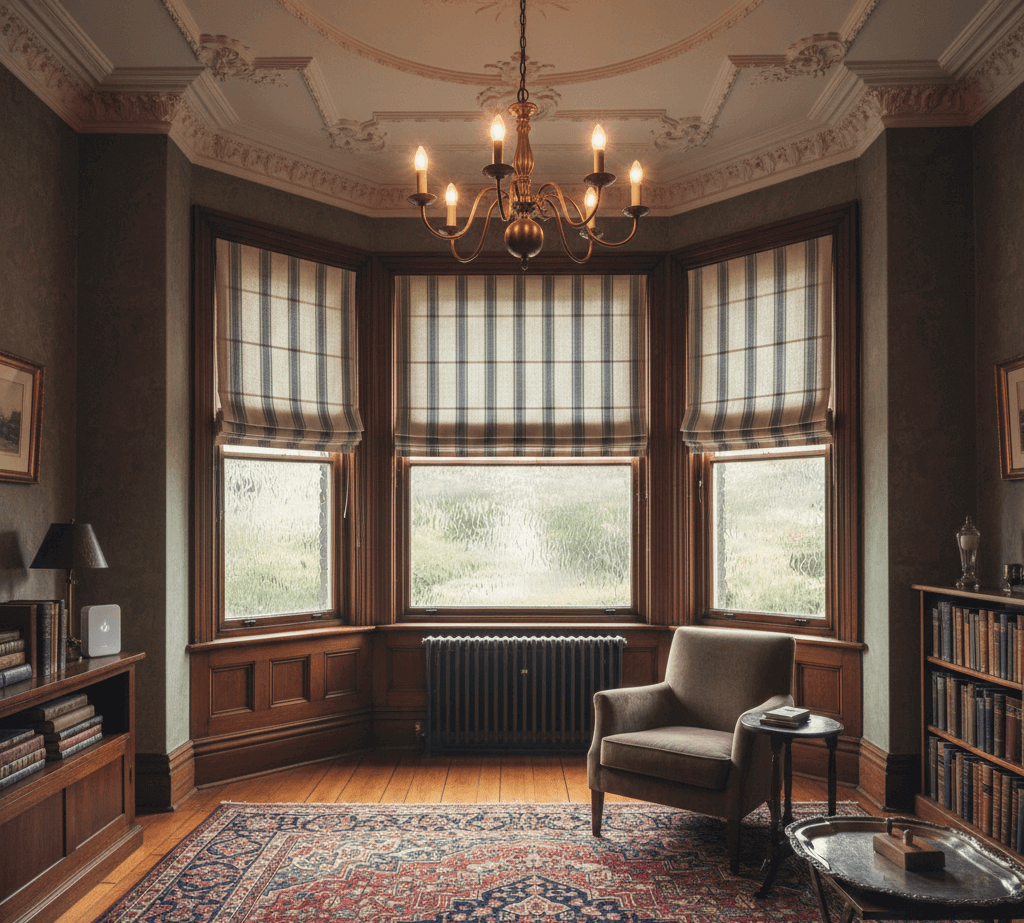
Owning a period home is a balancing act between honouring history and enjoying modern comfort. While original sash windows and ornate plaster work provide undeniable charm, they often lack the functional efficiency of 21st-century living. Traditional lighting can feel dim or impractical, and manual blinds on tall, drafty windows are often a chore to operate.
Smart home technology offers a solution, but for historic properties, the “how” is just as important as the “what.” You need a system that respects the architectural integrity of the building—meaning no invasive rewiring or clunky, plastic hardware. This guide explores how to integrate smart blinds and lighting into period homes using battery-powered options, bridge hubs, and expert aesthetic strategies.
1. The Power of Wireless: Battery-Powered Smart Blinds
In a modern build, running wires behind drywall is a straightforward process. In a Grade II listed building or a Victorian terrace with solid stone walls, it is a logistical nightmare. This is where battery-powered smart blinds become essential.
Why Battery-Powered?
- Zero Structural Impact: Since they don’t require an electrical connection, there is no need to chase cables into historic masonry or disturb original wood paneling.
- Simplified Installation: Most units, such as those from Lutron Serena or Somfy, use ultra-quiet motors powered by standard D-cell batteries or rechargeable lithium packs.
- Versatility: Period homes often feature “awkward” windows—skylights, high-up clerestories, or deep-set bays. Wireless motors allow you to automate these without the constraints of nearby outlets.
Pro Tip: Look for “rechargeable” packs with USB-C ports. Some high-end models only require a charge once every 6 to 12 months, making them a low-maintenance choice for high ceilings.
2. Navigating Thick Walls with Bridge Hubs
One of the greatest technical hurdles in older homes is connectivity. Thick lath-and-plaster walls or solid brickwork act as a “Faraday cage,” blocking Wi-Fi signals and causing smart devices to lag or drop offline.
The Role of the Bridge Hub
A bridge hub (or gateway) acts as a dedicated translator between your home router and your smart devices. Instead of every blind and bulb fighting for a Wi-Fi signal, they communicate via low-frequency protocols like Zigbee, Z-Wave, or Lutron’s Clear Connect.
- Reliability: These frequencies penetrate thick walls much more effectively than standard 2.4GHz Wi-Fi.
- Stability: If your Wi-Fi goes down, your pre-set schedules (such as “Close blinds at sunset”) will often still function because the hub handles the local logic.
- Scalability: A single hub, like the Lutron Caséta Smart Bridge or a Philips Hue Bridge, can manage dozens of devices across multiple floors, ensuring your Victorian villa stays connected from the cellar to the attic.
3. Aesthetic Integration: Hiding the Tech
The goal of smart tech in a period home is to be felt, not seen. The “Star Trek” look of glowing blue LEDs and bulky plastic sensors clashes with antique furniture and heritage paint colors.
Discreet Blinds & Window Treatments
- The “Inside Mount”: Install roller or honeycomb blinds inside the window recess to hide the motor casing. If you have original shutters, smart blinds can often be mounted behind them, providing a modern blackout layer without changing the room’s look.
- Fabric Choice: Opt for traditional textures—linens, velvets, or woven wood—that mimic the original era. Many smart blind manufacturers now offer “heritage” collections specifically designed for classic interiors.
- Automated Roman Shades: For a softer look, choose smart Roman shades. These provide the elegant folds of traditional drapery while hiding the battery-powered motor within the top rail.
4. Practical Automation Scenarios
Integrating these systems allows you to create “Scenes” that protect your home and enhance its character:
- The “Heritage Protection” Scene: Program your smart blinds to close partially when sensors detect high UV levels. This prevents the sun from fading antique rugs, paintings, and original wood flooring.
- The “Welcome Home” Scene: As you pull into the driveway, your smart hub triggers the porch light and the hallway chandelier to turn on at a warm 20% dim, while the living room blinds lower for privacy.
- The “Simulated Occupancy” Scene: For security, your lights and blinds can mimic your daily routine while you are away, making the house look lived-in without the need for clunky plug-in timers.
Conclusion
Modernizing a period home doesn’t have to mean compromising its soul. By opting for battery-powered blinds, you bypass the need for invasive wiring. By using a bridge hub, you ensure a rock-solid connection through even the thickest walls. And by focusing on discreet integration, you ensure that your home remains a timeless sanctuary—just one that’s a little easier to live in.