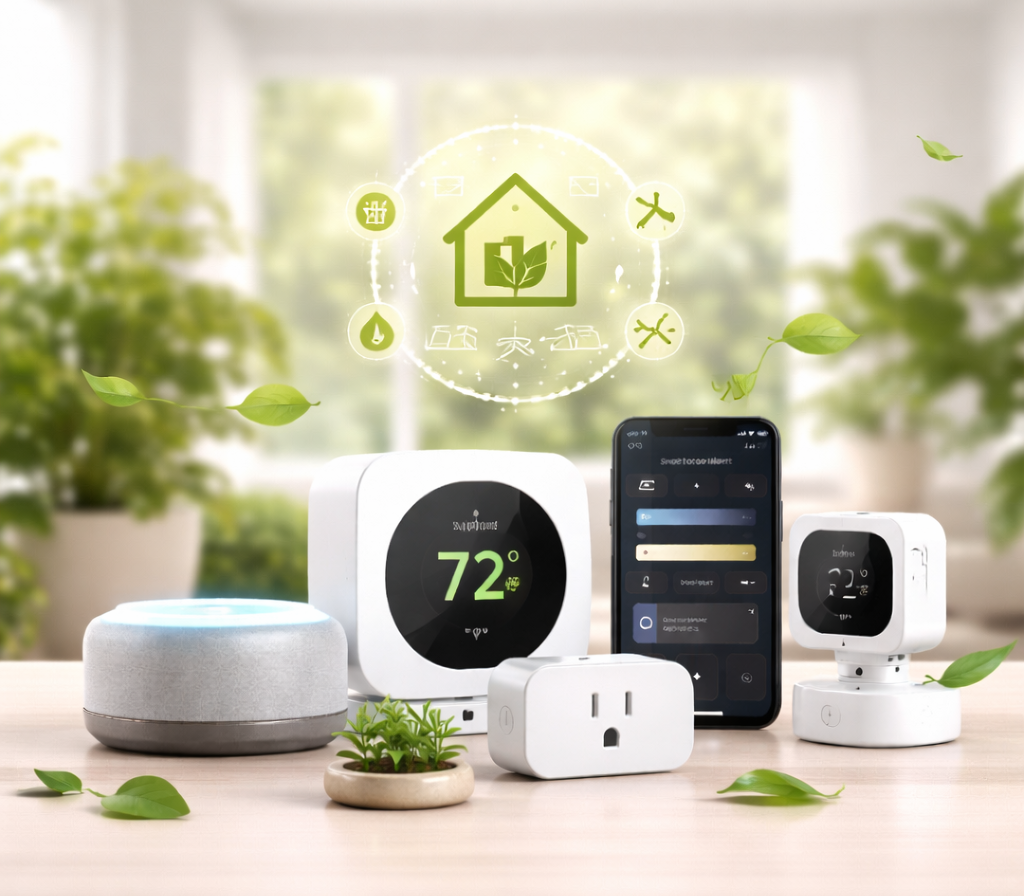
Smart home technology supports sustainable living by reducing energy consumption, minimising water waste, and improving resource management. Through smart thermostats, automated lighting, energy-monitoring systems, and intelligent appliances, households can control usage more efficiently and avoid unnecessary waste. These systems adapt to daily routines, switch off unused devices, and provide real-time data, helping families lower their carbon footprint, reduce utility bills, and adopt more environmentally responsible habits.
Modern living is undergoing a quiet revolution where the focus has shifted from mere convenience to conscious, effortless stewardship of our planet. The days of manual conservation are being replaced by an “intelligent ecosystem” approach, where your home environment works behind the scenes to minimize its own carbon footprint.
Rather than seeing technology as a luxury, eco-conscious homeowners are viewing it as a critical infrastructure for a circular economy. This new paradigm of “digital green living” allows us to reduce our impact on the Earth without sacrificing the comforts of home.
The New Architecture of Energy Intelligence
The most profound shift in sustainable living isn’t found in a single device, but in the way our homes now anticipate energy needs. Traditional homes are “reactive”—you turn on a light when it’s dark or adjust the heat when you’re cold. A smart, sustainable home is “predictive.”
Beyond the Thermostat
While early smart thermostats saved energy by following schedules, current systems utilize Grid-Aware AI. These systems monitor the local power grid to understand when renewable energy (like wind or solar) is most abundant. They may slightly over-cool your home by a degree when solar power is peaking at noon, then coast through the late afternoon when the grid is under stress. This doesn’t just lower your bill; it ensures your home is powered by the cleanest electrons available.
Circadian and Ambient Lighting
Sustainability also extends to how we interact with natural resources. Daylight Harvesting technology uses sensors to measure the amount of sunlight entering a room. Instead of having your kitchen lights at 100% all day, the system dynamically dims them to 30% on a sunny afternoon, supplementing only what is necessary to maintain a constant level of brightness. This synergy between natural and artificial light can slash lighting costs by nearly 90%.
Water Management: From Waste to Precision
Water is often the “forgotten” resource in sustainability talks, yet it is one of the most critical. Smart technology has moved into the pipes and soil to protect this precious commodity.
- Predictive Irrigation: Traditional “dumb” timers water the lawn even during a rainstorm. Modern smart controllers analyze hyper-local satellite weather data and soil moisture levels to ensure that not a single gallon is wasted. In many regions, this has reduced outdoor water consumption by half.
- Acoustic Leak Detection: Some of the most significant water waste happens behind the walls. Ultrasonic sensors can now “hear” the microscopic vibrations of a pinhole leak or a running toilet that might otherwise go unnoticed for months. By providing immediate smartphone alerts, these devices prevent thousands of gallons from literally disappearing down the drain.
Curbing the “Vampire” Appetite
Even when “off,” our electronics traditionally acted as “vampires,” sucking small amounts of standby power 24/7. In a large home, this can account for up to 10% of total energy use.
Automated Power Strips and Smart Plugs act as the ultimate gatekeepers. They can be programmed to completely sever the connection to your entertainment center or home office during the night. By “air-gapping” these devices digitally, you ensure that your home’s baseline energy draw drops to near zero while you sleep.
The Circular Kitchen: Closing the Loop on Food Waste
Food waste is a major contributor to methane emissions in landfills. Smart technology is helping to close this loop right at the source.
- AI-Vision Inventory: Refrigerators equipped with internal cameras allow you to check your supplies while at the store, preventing the over-purchasing that leads to spoilage.
- Smart Composting: Compact, countertop units have modernized the composting process. These devices use heat and aeration to turn food scraps into nutrient-rich “dirt” in a matter of hours, rather than months, making it feasible even for those living in urban apartments to participate in a circular waste system.
Smart Technology and Energy Efficiency
Smart home technology plays a vital role in improving energy efficiency in modern households. Devices such as smart thermostats, automated lighting systems, and intelligent power outlets help regulate electricity usage based on daily routines and occupancy patterns. By automatically switching off unused appliances and optimising heating and cooling, these systems prevent unnecessary energy consumption. As a result, households can reduce their environmental impact while enjoying lower utility bills and greater comfort throughout the year.
Supporting Sustainable Habits Through Automation
In addition to saving energy, smart home systems encourage sustainable living by promoting responsible daily habits. Real-time monitoring tools allow homeowners to track water, gas, and electricity usage, helping them identify areas of waste. Automated reminders and usage reports further support informed decision-making. Over time, these features motivate families to adopt eco-friendly routines, minimise resource wastage, and contribute positively to environmental conservation.
Final Thoughts: The ROI of Responsibility
The true value of smart home sustainability isn’t found in a single “wow” feature. It’s found in the cumulative effect of a thousand small, automated decisions made every day. When your home knows to dim the lights, lower the shades, and delay the dishwasher until the sun is out, it removes the “mental load” of being eco-friendly.
Investing in these technologies creates a home that is not just more efficient, but more resilient and in harmony with the world outside its walls.