With rising electricity prices, frequent load-shedding, and increasing dependence on appliances, many Pakistani households are now considering solar energy as a long-term solution. In 2026, installing solar panels is no longer limited to luxury homes or commercial buildings. It has become a practical investment for middle-class families who want stable electricity and lower monthly bills.
However, one important question remains: Is solar really worth it in Pakistan? How much does it cost? How long does it take to recover the investment? And which system is best for homes?
This detailed guide answers all these questions and helps you decide whether switching to solar energy is the right choice for your household.
Why More Homes in Pakistan Are Switching to Solar
Over the past few years, solar adoption in Pakistan has grown rapidly. Several factors are driving this shift.
Rising Electricity Tariffs
Electricity rates continue to increase every year. Many households now pay tens of thousands of rupees monthly, especially during summer.
Load-Shedding and Power Cuts
Unstable electricity supply disrupts daily life, especially for families working from home, students, and businesses.
Improved Solar Technology
Modern solar panels are more efficient, durable, and affordable than older models.
Government Net Metering Policy
Net metering allows homeowners to sell excess electricity back to the grid, reducing bills further.
All these factors make solar an attractive long-term solution.
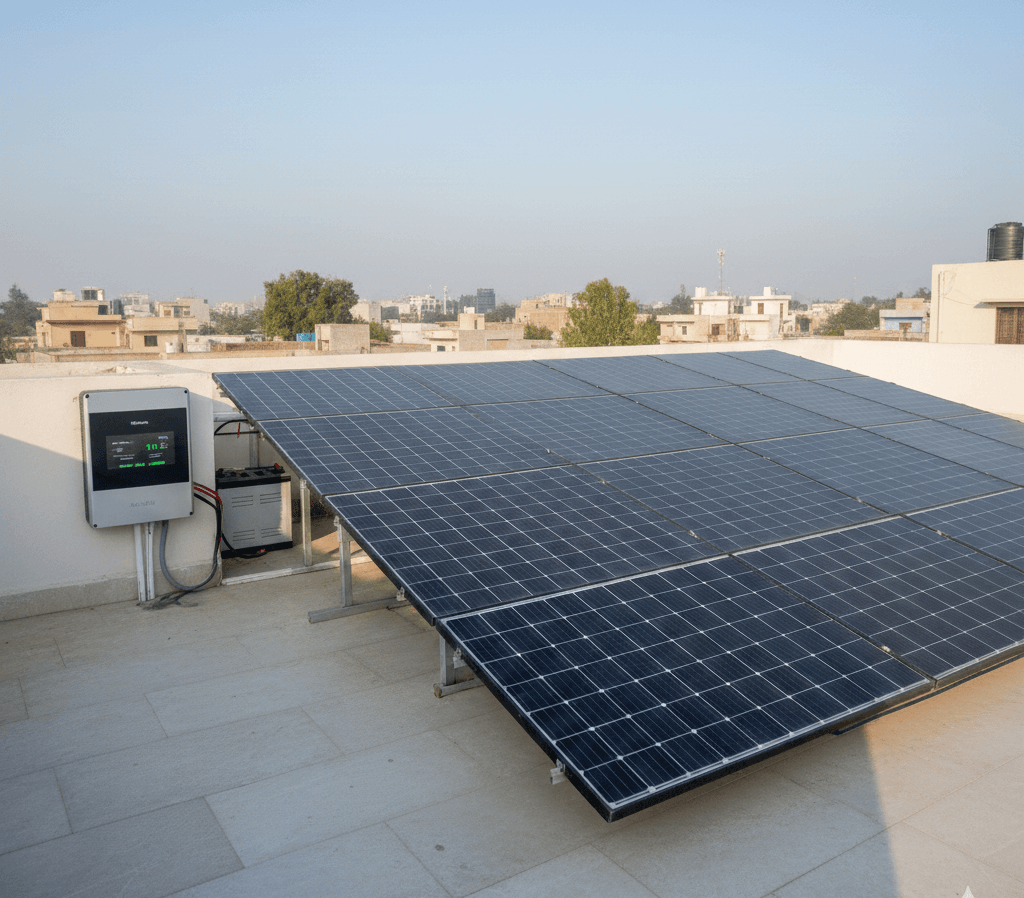
How Solar Panel Systems Work for Homes
A home solar system converts sunlight into electricity using photovoltaic panels.
Main Components
A typical residential solar system includes:
- Solar panels
- Inverter
- Mounting structure
- Batteries (optional)
- Wiring and protection devices
Working Process
- Panels absorb sunlight
- Convert it into DC electricity
- Inverter converts DC to AC
- Power is used in home
- Excess energy goes to grid (net metering)
This system allows homes to generate clean, free electricity daily.
Types of Solar Systems in Pakistan
There are three main types of solar systems for homes.
1. On-Grid Solar System
Connected directly to WAPDA.
Advantages:
- Lower cost
- Net metering available
- No batteries needed
Disadvantages:
- Stops working during power cuts
Best for: Areas with stable electricity
2. Off-Grid Solar System
Independent system with batteries.
Advantages:
- Works during load-shedding
- Full backup
Disadvantages:
- Expensive batteries
- Higher maintenance
Best for: Areas with frequent outages
3. Hybrid Solar System
Combination of both.
Advantages:
- Net metering
- Battery backup
- Maximum flexibility
Disadvantages:
- Highest cost
Best for: Homes wanting full control
Solar Panels Cost in Pakistan (2026)
Prices vary depending on system size, brand, and installation quality.
Average Solar System Prices
| System Size | Estimated Cost (2026) |
|---|---|
| 3kW | Rs. 550,000 – 750,000 |
| 5kW | Rs. 850,000 – 1,100,000 |
| 7kW | Rs. 1,200,000 – 1,450,000 |
| 10kW | Rs. 1,600,000 – 2,000,000 |
Prices may vary by city and installer.
Cost Breakdown of a Home Solar System
Understanding cost components helps avoid overcharging.
Solar Panels (40–45%)
Main cost component.
Inverter (20–25%)
Converts electricity.
Structure & Installation (15–20%)
Mounting, labour, wiring.
Batteries (Optional) (15–25%)
For backup systems.
Protection Equipment (5%)
Breakers, surge protection.
Always ask for a detailed quotation.
How Much Can You Save with Solar in Pakistan?
Solar savings depend on usage and system size.
Example Calculation
Monthly Bill: Rs. 25,000
Annual Bill: Rs. 300,000
5kW System Cost: Rs. 950,000
Annual Saving: ~Rs. 250,000
Payback Period: ~4 Years
After this, electricity is almost free.
Net Metering in Pakistan: Extra Savings
Net metering allows you to export excess power to WAPDA.
Benefits
- Lower bills
- Credit adjustment
- Faster recovery
- Higher return on investment
Requirements
- Approved inverter
- Bi-directional meter
- NEPRA registration
- Distribution company approval
Most professional installers handle this process. Learn more at TechToTable’s Energy Saving Guides.
Is Solar Worth It for Small Homes?
Yes, even small homes benefit.
Small Home Example
2–3 rooms
Monthly Bill: Rs. 12,000
3kW System
Saving: ~70%
Payback: 3–4 years
Solar is scalable, so you can upgrade later.
Best Solar Panels Brands in Pakistan (2026)
Popular Reliable Brands
- Longi
- JA Solar
- Canadian Solar
- Jinko
- Trina
Always choose Tier-1 certified panels.
Important Features to Look For
Efficiency Rating
Higher efficiency = more output.
Warranty
Minimum 12 years product, 25 years performance.
Temperature Resistance
Important for hot climates.
Anti-PID Protection
Improves lifespan.
Inverter Quality
Equally important as panels.
Installation Tips for Maximum Performance
Poor installation reduces output.
Best Practices
- South-facing panels
- 25–30° tilt angle
- No shading
- Strong mounting
- Proper earthing
Always inspect after installation.
Maintenance Requirements
Solar systems need minimal maintenance.
Monthly
- Clean panels
- Check connections
Yearly
- System inspection
- Performance testing
Dust reduces efficiency by up to 15%.
Common Mistakes to Avoid
Choosing cheap inverters
Ignoring warranty
No net metering
Poor installer
Overloading system
Avoiding these saves money.
Solar vs WAPDA: Long-Term Comparison
| Feature | Solar | Grid Electricity |
|---|---|---|
| Monthly Cost | Low | Rising |
| Reliability | High | Unstable |
| Environment | Clean | Polluting |
| Long-Term Cost | Fixed | Increasing |
| Control | High | Low |
Solar clearly wins long-term.
FAQs
How long do solar panels last?
25–30 years with proper care.
Do solar systems work in winter?
Yes, with slightly reduced output.
Can I run AC on solar?
Yes, with 5kW+ systems.
Is solar safe for homes?
Yes, when installed properly.
Can I upgrade later?
Yes, most systems are expandable.
Final Verdict: Is Solar Worth It in Pakistan in 2026?
Yes, absolutely.
In 2026, solar energy is one of the smartest investments for Pakistani homeowners. With rising electricity tariffs and unstable supply, relying only on grid power is becoming financially risky.
A properly installed solar system reduces monthly bills, provides energy security, increases property value, and protects against future price hikes. Although initial costs are high, the long-term savings outweigh the investment.
For most homes, a 5kW to 7kW system offers the best balance between cost and performance.
If you are planning to stay in your home for the next 5–10 years, switching to solar is not just worth it—it is essential. Learn more at TechToTable’s Energy Saving Guides.